
Glass Pergola Roof Leak Repair in Dubai: Diagnosis and Resealing Guide
Diagnose a leaking glass pergola roof in Dubai with practical guidance on joints, gutters, flashings, glass damage, safe access, resealing, and replacement scope.
Quick answer
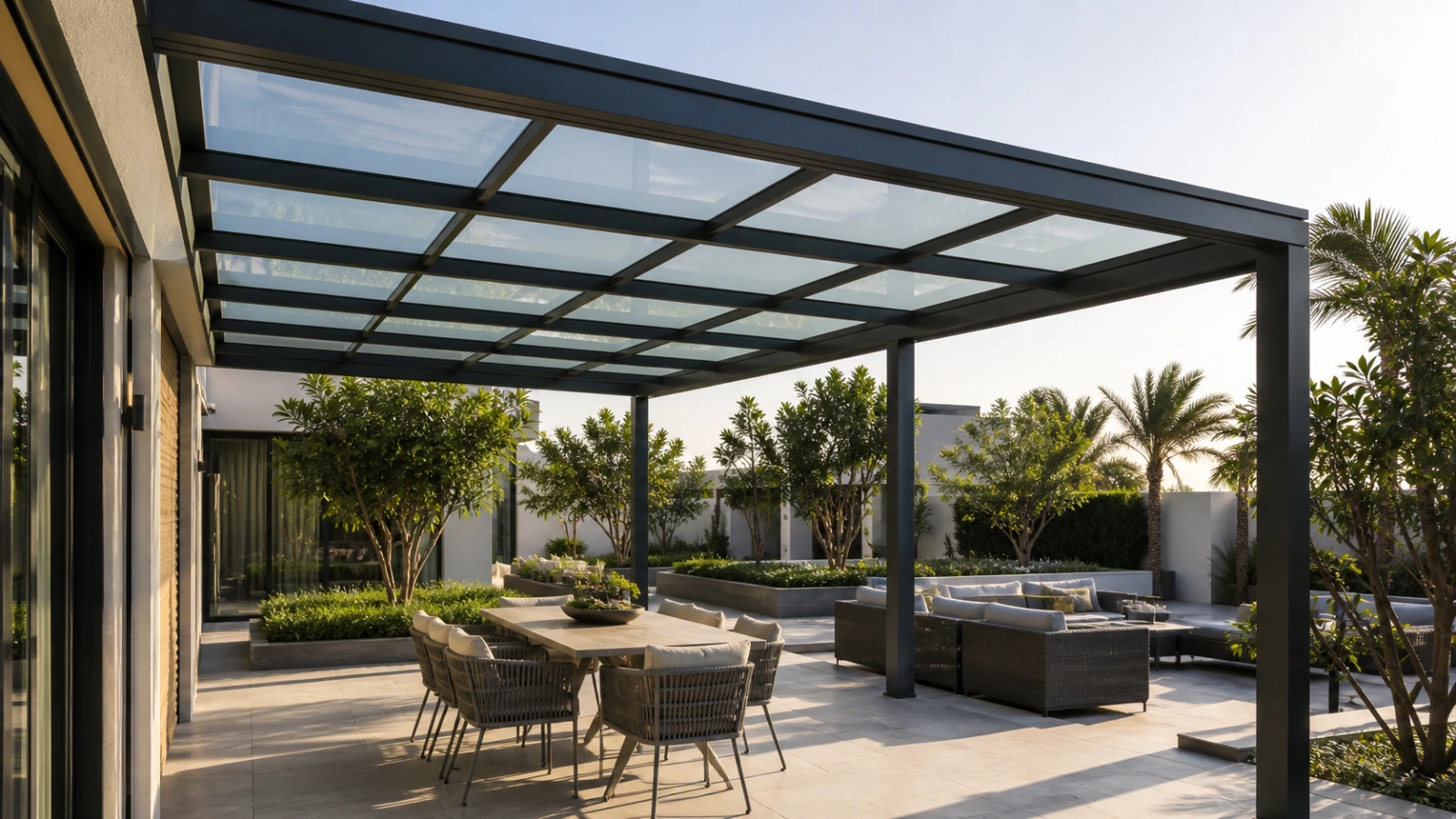
A leaking glass pergola roof in Dubai should be diagnosed before new sealant is applied. Water can enter through failed panel joints, perimeter flashings, pressure-cap seals, fasteners or the wall connection; it can also overflow from blocked gutters or travel along the frame before appearing indoors. A controlled inspection should trace the path, record when leakage occurs and distinguish a local joint failure from a drainage or movement problem.
Glass World supports glass replacement, aluminium and glass works and glazing maintenance across Dubai and the UAE. The repair scope may range from cleaning drainage and renewing compatible seals to replacing damaged laminated roof glass or correcting defective interfaces.
Why glass pergola roofs leak
Common causes include aged or poorly adhered silicone, shrunken gaskets, loose caps, cracked flashings, blocked weep paths, undersized gutters, failed wall interfaces and joints that cannot accommodate thermal movement. Dust and leaf debris can redirect water over an otherwise sound gutter. Leakage after wind-driven rain may indicate a different entry point from dripping after gentle rain or cleaning.
Photograph the wet area and roof before it dries, note the rain direction and intensity, and identify whether water appears at one corner, along a rafter or across several joints. Do not assume the stain sits directly below the defect: hollow aluminium members and sloping glass can carry water considerable distances. A staged hose test may help, but it should be controlled to isolate small zones without flooding unrelated interfaces.
Check the overhead glass before resealing
Inspect every panel for cracks, edge chips, impact marks, coating damage, laminate clouding or bubbles, and signs that water has reached the interlayer edge. Overhead glazing normally relies on laminated safety glass for fragment retention. A cracked panel, displaced panel or deteriorating laminate needs specialist assessment; resealing the perimeter does not restore the glass capacity or post-breakage performance.
If replacement is required, match the approved make-up, dimensions, heat treatment, interlayer, coating, frit, edgework and support conditions. A visually similar pane may perform differently overhead. Retain labels, drawings and previous invoices where available, and survey the actual opening after safe removal planning. See the toughened versus laminated glass guide for a broader safety-glass comparison.
Inspect frames, caps and the villa connection
Look for open mitres, loose cover caps, missing fasteners, distorted pressure plates, corrosion, frame movement and gaps where rafters meet perimeter beams. Failed seals may be a symptom of excessive movement rather than the root cause. Glass should retain correct edge cover and must not bear hard against aluminium, steel or masonry; displaced settings need investigation before joints are closed again.
Wall connections are a common risk area. The design must identify the actual substrate behind cladding or render, keep anchors away from vulnerable edges and services, and provide a durable head flashing or waterproof transition. Freestanding posts may reduce reliance on the villa wall but need suitable foundations and coordination with paving, irrigation, drainage and buried services. Concealed assumptions often become the most expensive site changes.
Clean and test roof drainage
A pergola roof that appears flat still needs a deliberate fall to move water toward gutters and outlets. The layout should show the high point, low point, gutter capacity, downpipe route, overflow provision and discharge location. Water should not drain toward door thresholds, neighbouring properties or areas where it can stain the facade. Dubai rain can be intense, so drainage must be sized for more than an occasional light shower.
Silicone joints, pressure caps, gaskets, flashings and perimeter interfaces each have a defined role. A surface bead of sealant is not a complete waterproofing design, and joints must accommodate movement from heat without losing adhesion. Specify compatible materials and keep weep paths accessible. If the pergola meets sliding doors or a facade, coordinate it with the existing building envelope rather than treating the two systems independently.
Choose compatible sealants and prepare joints
Successful resealing depends on adhesion and compatibility, not on adding a thicker surface bead. The old material must be removed to the extent required by the repair design, joint faces cleaned without damaging coatings, and the correct primer, backing material, joint geometry and sealant selected. Confirm compatibility with laminated-glass interlayers, gaskets, coatings, aluminium finishes and adjacent waterproofing.
Dubai heat produces repeated expansion and contraction, so a rigid patch across a moving joint often fails. Keep drainage paths open and do not fill designed weep holes with silicone. Follow product conditions for application temperature, joint dryness, tooling and cure time, and protect the terrace until curing is complete. Where system identity is unknown, adhesion and compatibility testing can reduce the risk of another premature failure.
Plan safe access and a controlled repair
Confirm community, developer, landlord and authority requirements before ordering. The submission may need drawings, elevations, colour approval, structural calculations, connection details and confirmation that setbacks, drainage or the villa facade are not adversely affected. Requirements vary by property and scope, so a precedent from another community should not be treated as automatic approval.
Installation planning should cover delivery route, panel weights, lifting equipment, scaffold or mobile access, exclusion zones, protection of doors and paving, and working-hour restrictions. Final frame and glass dimensions should come from a verified site survey. Panels need controlled lifting with rated equipment, protected edges and trained installers; nobody should walk on the completed roof unless it was specifically designed and approved for that loading.
When repair becomes replacement
Local resealing may be appropriate when glass and framing are sound and the leak is isolated to an accessible, correctly formed joint. Broader replacement may be justified when panels are cracked or delaminating, flashings are fundamentally defective, gutters cannot handle the roof area, frames have moved or corroded, or repeated patch repairs have obscured the original drainage design.
Compare quotations only when they describe the same scope. A useful offer identifies the glass make-up, interlayer, heat treatment, coating, panel sizes, frame profiles and finish, structural design responsibility, anchors, roof fall, drainage, waterproof interfaces, access method, installation, protection, warranty and exclusions. Ask who is responsible for approvals, civil work, foundations, electrical items and repair of surrounding finishes.
Repair cost factors and quotation checklist
Repair cost depends on roof size and height, leak extent, access equipment, removal and disposal of old sealant, joint preparation, compatible materials, gutter or flashing work, glass replacement, lifting needs, testing and making good. A cheap surface patch is not comparable with a repair that includes diagnosis, safe access, full joint preparation, curing protection and controlled water testing.
For a useful quotation, send the Dubai location, villa or community details, roof dimensions, clear photographs above and below, leak videos, the weather conditions when it occurs, previous repair history and any original drawings. Mark each drip location and include access-route dimensions. Ask the contractor to state the diagnosed cause, exact repair zones, materials, preparation, access, testing, warranty and exclusions.
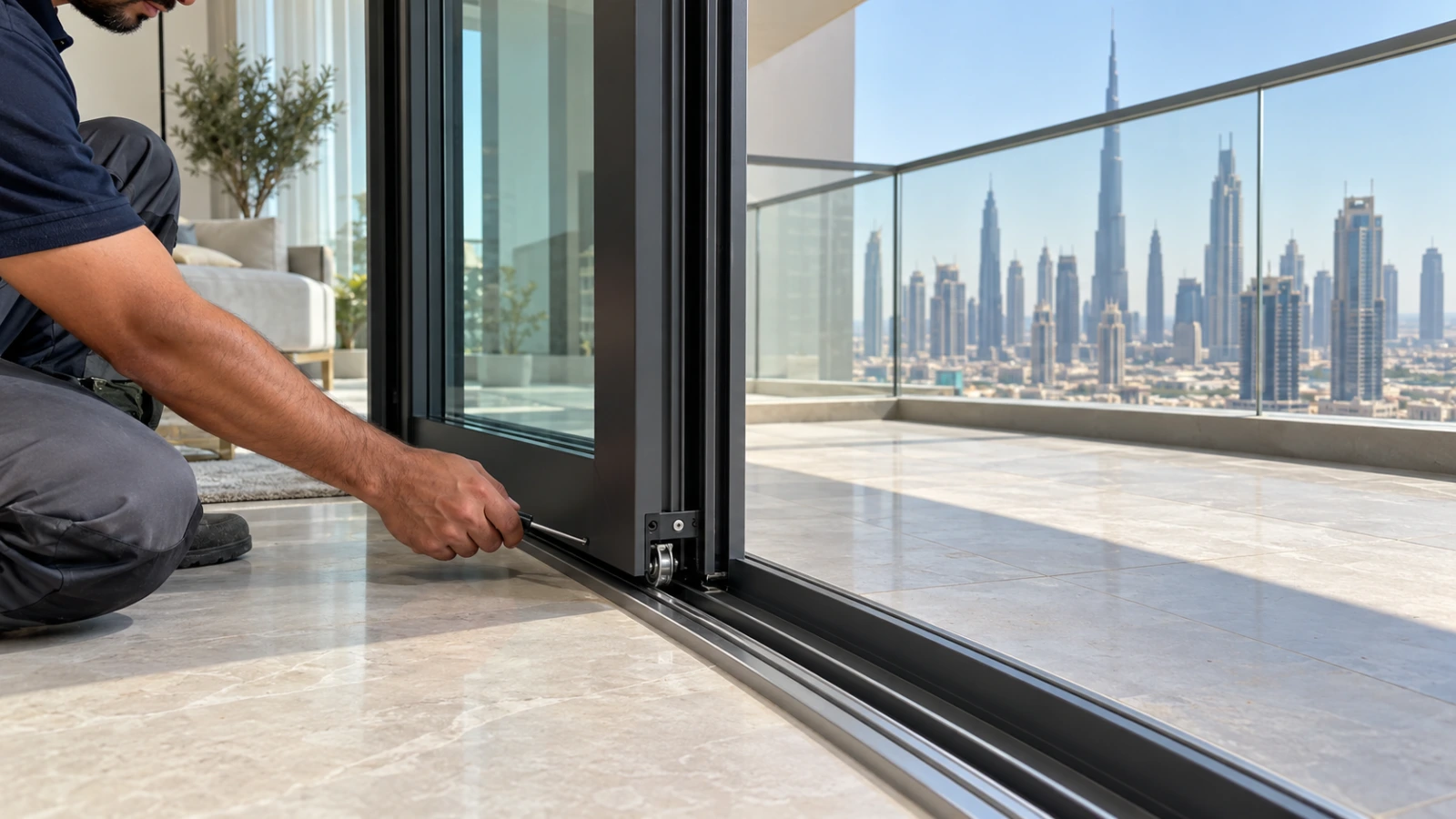
Aluminium Sliding Door Roller Replacement in Dubai: Signs, Process and Cost Factors
Learn when aluminium sliding door rollers need replacement in Dubai, what a site visit should check, and how to plan a lasting repair for homes and commercial spaces.
Read article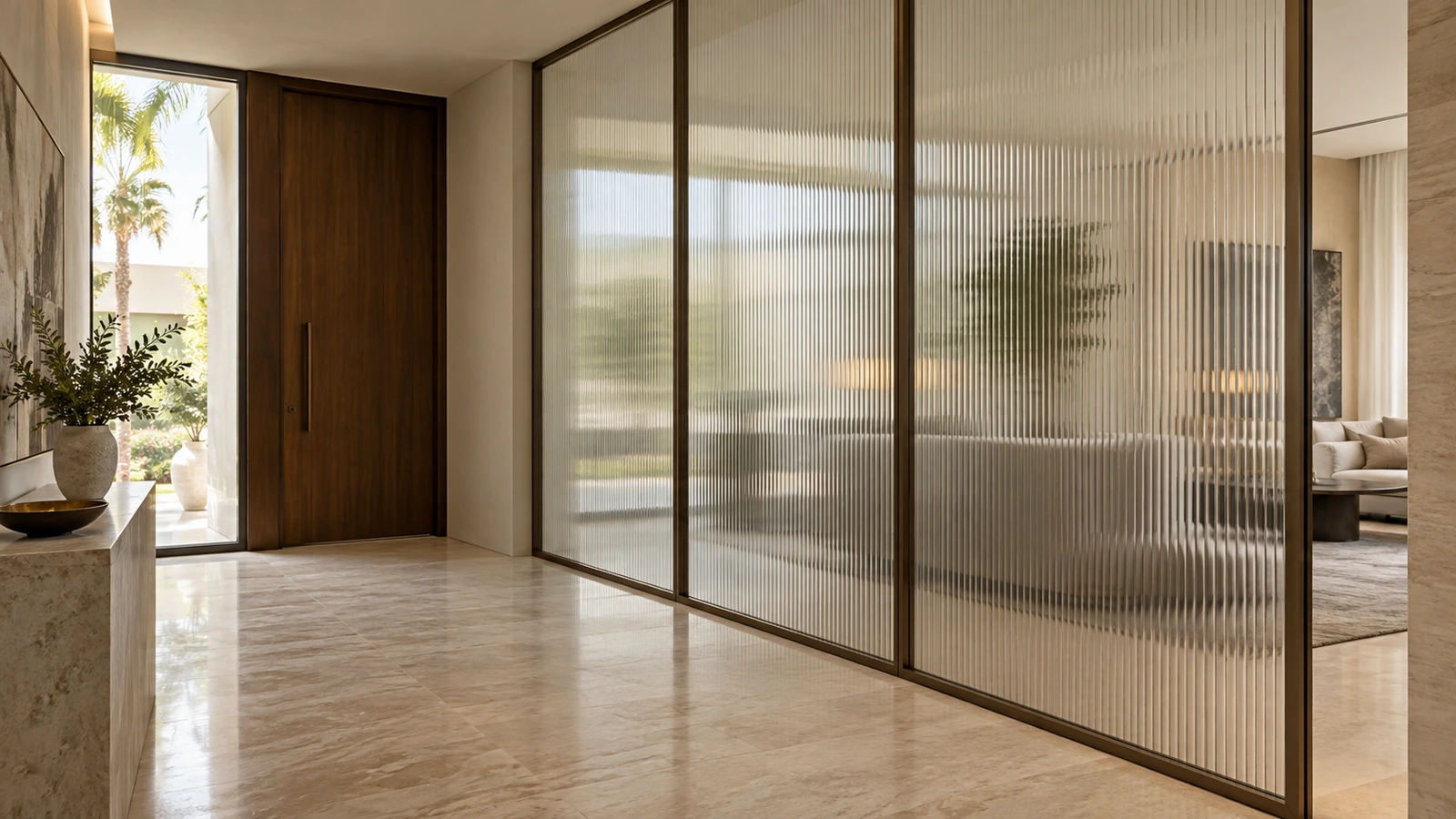
Fluted Glass Partitions in Dubai: Privacy and Cost Guide
Planning fluted glass partitions in Dubai? Compare privacy, rib patterns, safety glass, frames and installation costs before ordering a custom screen.
Read article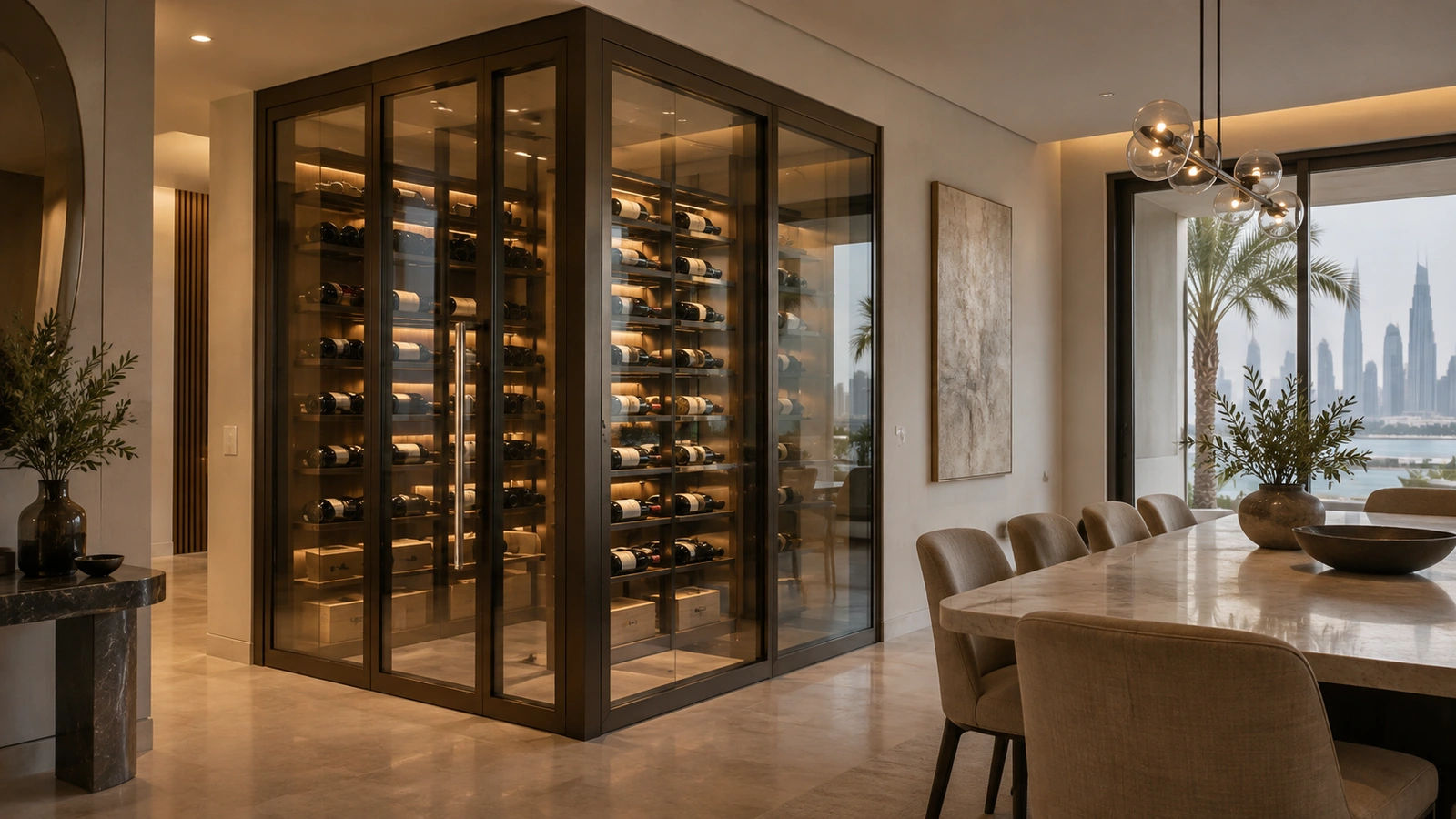
Glass Wine Rooms in Dubai: Insulated Glazing and Cost Guide
Planning a glass wine room in Dubai? Understand insulated glazing, sealed doors, condensation, cooling coordination and quote costs before installation.
Read article