
Cracked Balcony Glass Replacement in Dubai: Safety and Cost Guide
Plan cracked balcony glass replacement in Dubai with guidance on immediate safety, laminated panels, measurements, fittings, access, cost, and quotation scope.
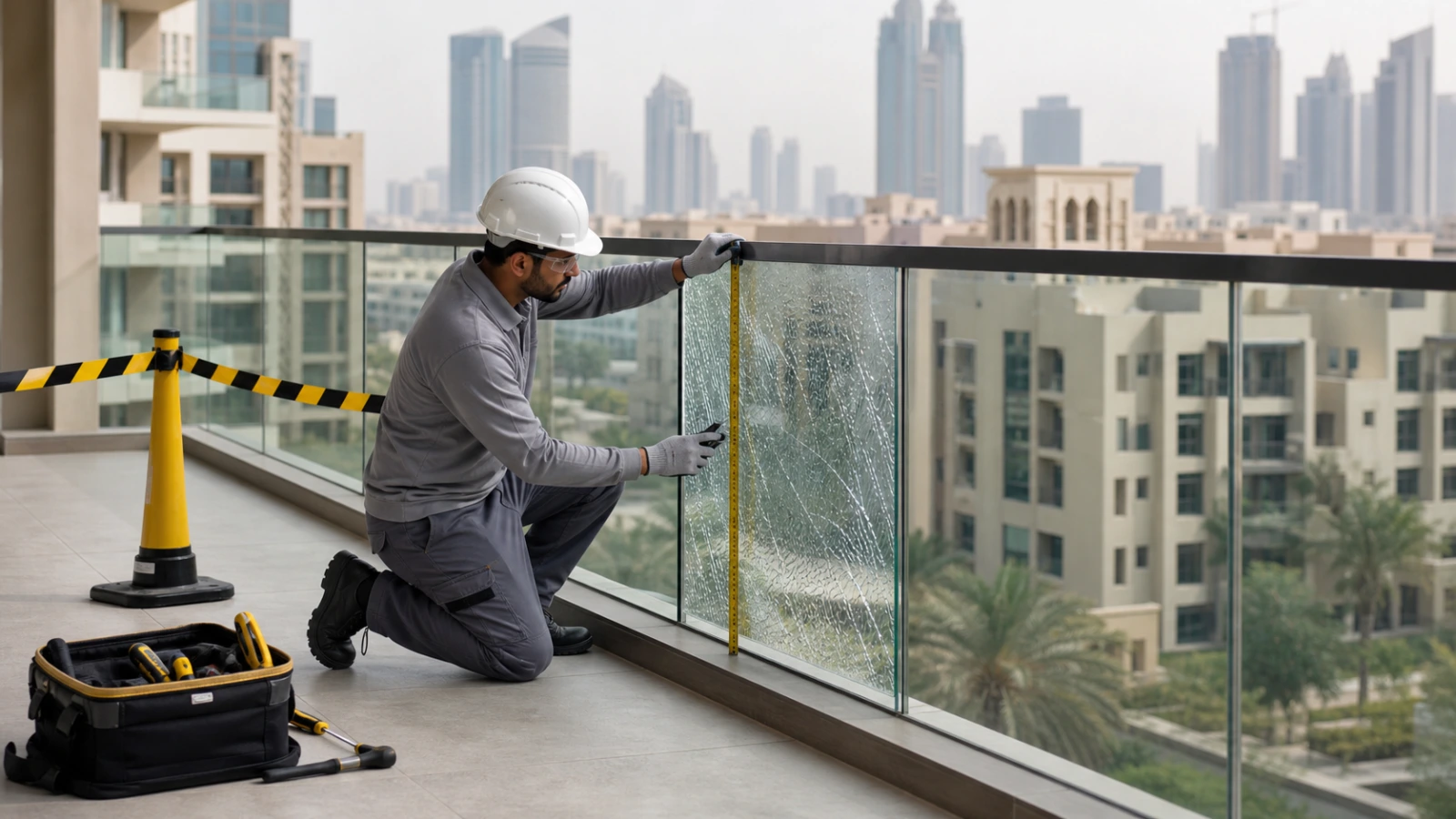
Quick answer
A cracked balcony glass panel should be treated as a safety issue, even when the fragments remain held together. Keep people away from the panel, prevent the balcony door from being used where practical, protect the area below, and arrange a competent survey. Do not push the glass, remove loose pieces, drill it, or rely on tape as a structural repair.
Replacement requires more than measuring the visible opening. The survey must identify the complete glass build-up, processed size, edgework, holes or notches, support system, handrail, frame condition, glass-to-metal clearances, likely cause of failure and safe removal method. Glass World coordinates glass replacement and glass railing work across Dubai and the UAE.
What to do immediately after balcony glass cracks
Close access to the balcony and keep children, pets, furniture and cleaning equipment away from the damaged panel. If the balcony is above a pavement, entrance, terrace or another occupied area, notify building management so the zone below can also be assessed and isolated. Photograph the damage from a safe position without leaning on or beyond the railing.
Call for urgent assessment if the pane is moving, bowing, separating from its channel, shedding fragments, making new cracking sounds or leaving an open edge. Wind pressure and vibration can worsen an already damaged balustrade. Temporary restraint or screening must be designed for the actual condition; wrapping or boarding the wrong way can add load and trigger further failure.
Why balcony glass can crack
Common causes include direct impact, damaged edges, glass-to-metal contact, missing or displaced setting blocks, overtightened clamps, frame movement, corrosion, thermal stress, installation damage and manufacturing inclusions. A crack that starts at a corner, hole or clamp may indicate a local stress concentration, while a dense fracture pattern without an obvious impact still needs investigation rather than guesswork.
The cause matters because installing an identical pane into a defective support can produce the same failure again. Inspect the base channel, clamps, posts, handrail, gaskets, packers, fasteners, waterproofing and substrate before approving manufacture. Where other panels show chips, movement, loose fittings or seal failure, expand the survey beyond the visibly broken pane.
Match the original glass specification
Look for approved drawings, glass schedules, stamps, handover records and previous supplier information. Record overall thickness, individual plies, heat treatment, laminate interlayer, tint, coating, ceramic print, polished edges, corner radii, holes, notches and any handrail connection. Finished toughened glass cannot be safely trimmed or drilled on site, so every processed dimension must be confirmed before production.
Do not replace laminated glass with a single toughened pane simply because both are described as safety glass. Laminated glass can retain fragments after breakage, while toughened monolithic glass normally loses the full panel when it fractures. The required build-up depends on the railing design, loads, supports and post-breakage strategy; see the guide to toughened versus laminated glass for the practical differences.
Measure the panel and support system together
A reliable survey records more than width and height. It should capture the panel's position in the elevation, bottom and side clearances, channel depth, clamp centres, hole diameters, edge distances, corner shapes, handrail engagement and alignment with adjacent panes. Templates may be necessary for irregular balconies, curved edges or existing drilled connections.
Check whether the slab edge, parapet or steel support has moved or cracked and whether waterproofing will be disturbed during removal. Setting blocks, gaskets, bushes and isolation materials must suit the replacement glass and prevent hard contact. If the railing feels loose, the panel measurement should pause until the supporting structure and anchors have been assessed.
Plan safe removal and access
Balcony glass may need to be handled from inside the apartment, from an external access platform or with coordinated lifting from both sides. The method depends on panel weight, floor level, balcony depth, overhead clearance, door width, lift size, loading access and whether the damaged pane can remain stable during rigging. High-level work may require scaffold, a mobile elevated work platform, a building-maintenance unit or an approved rope-access solution.
The plan should include an exclusion zone, fragment containment, rated lifting equipment, wind limits, glass transport, temporary guarding and protection to finishes. Coordinate security, permits, lift bookings, neighbours, service corridors and working hours with building management. The balcony must not be returned to use until the replacement and its supports have been inspected.
Should one panel or the full railing be replaced?
One-panel replacement is often practical when adjacent glass, channels, clamps, anchors and handrails remain sound and the original specification can be matched. Colour can still vary because older clear, tinted or coated glass has weathered, and changes in glass supply may alter edge tone or reflectance. Review a sample where visual matching is important across a prominent facade.
Broader replacement may be justified when several panels are chipped or loose, the system lacks suitable post-breakage retention, fittings are badly corroded, the substrate has moved, records are unavailable or repeated failures point to a design problem. For planned upkeep rather than an isolated break, use the Dubai glass railing maintenance guide to structure the inspection scope.
Cracked balcony glass replacement cost in Dubai
Cost depends on panel size and weight, glass build-up, heat treatment, laminate interlayer, tint or coating, edge polishing, holes and notches, templates, quantity and fabrication lead time. Site costs vary with floor level, access equipment, lifting, temporary protection, building approvals, restricted hours, removal, disposal, fitting replacement, waterproofing and repairs to the base channel or substrate.
Compare quotations against one written scope. Each offer should state the exact glass specification, who takes final dimensions, hardware and gaskets to be reused or replaced, access and lifting method, temporary guarding, removal and disposal, expected lead time, installation sequence, warranty and exclusions. A glass-only price is not comparable with a complete safe replacement package.
What to send for a useful quotation
Share the Dubai location, building and floor, wide photographs of the balcony and elevation, close-ups of the crack origin and fittings, approximate panel dimensions, glass stamps, drawings if available, access route, area below, building-management requirements and any recent impact, noise or movement. Mark the damaged panel clearly on a wider photograph without approaching it closely.
Glass World can review the condition, arrange a site survey where required, coordinate fabrication and plan replacement around the building's access and safety controls. Final manufacture should start only after processed dimensions, glass build-up, support condition and responsible approvals are confirmed.
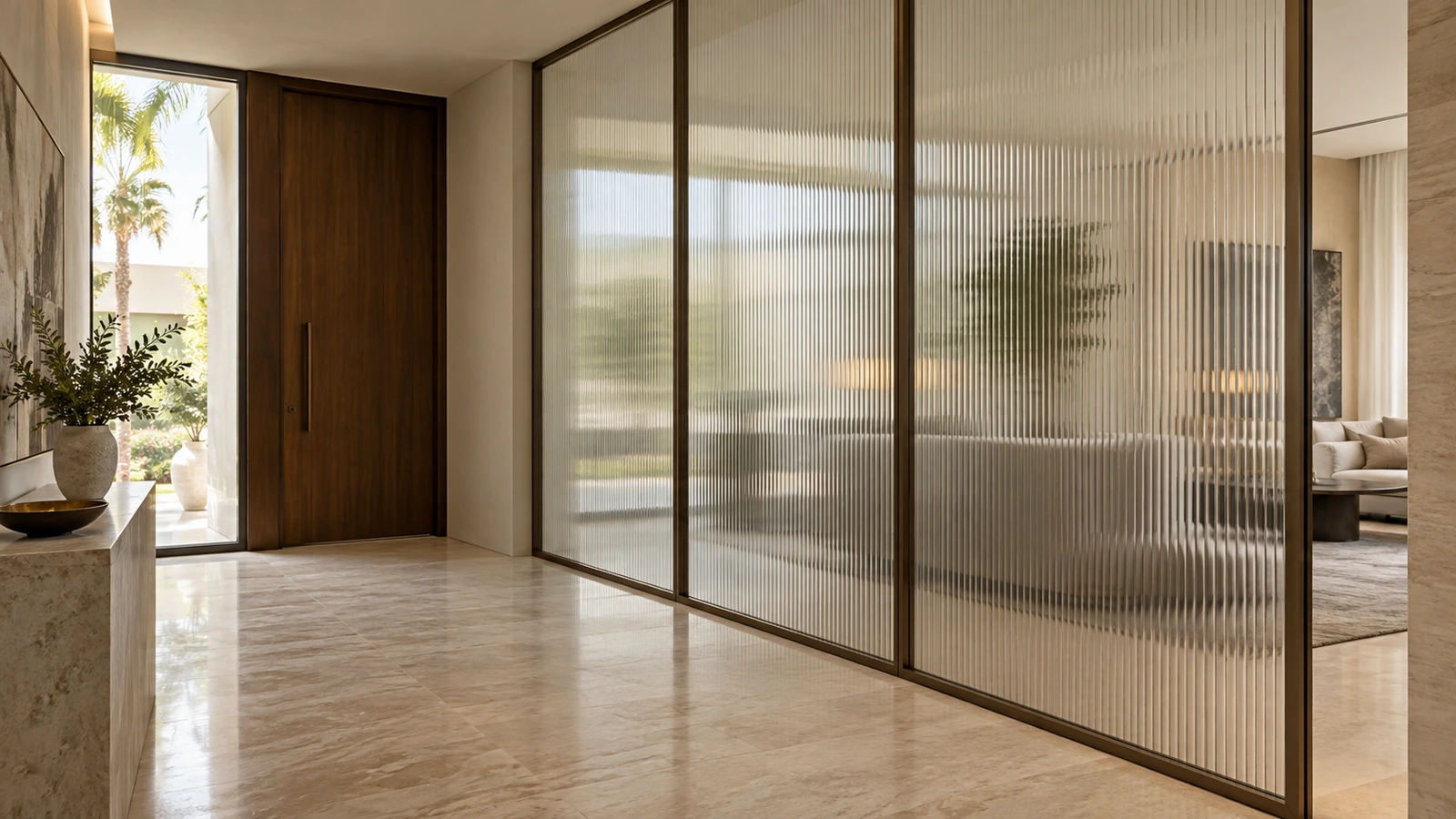
Fluted Glass Partitions in Dubai: Privacy and Cost Guide
Planning fluted glass partitions in Dubai? Compare privacy, rib patterns, safety glass, frames and installation costs before ordering a custom screen.
Read article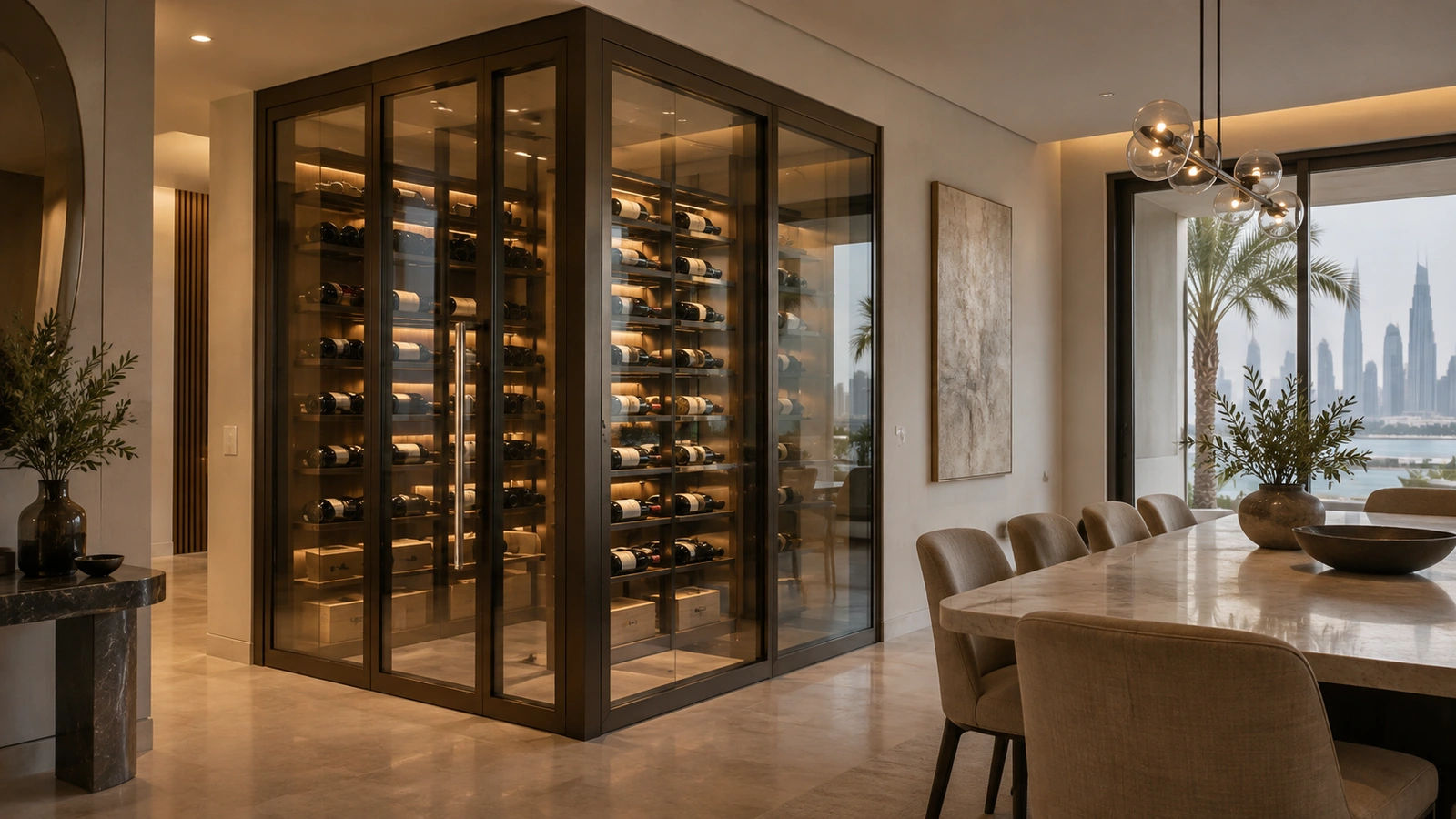
Glass Wine Rooms in Dubai: Insulated Glazing and Cost Guide
Planning a glass wine room in Dubai? Understand insulated glazing, sealed doors, condensation, cooling coordination and quote costs before installation.
Read article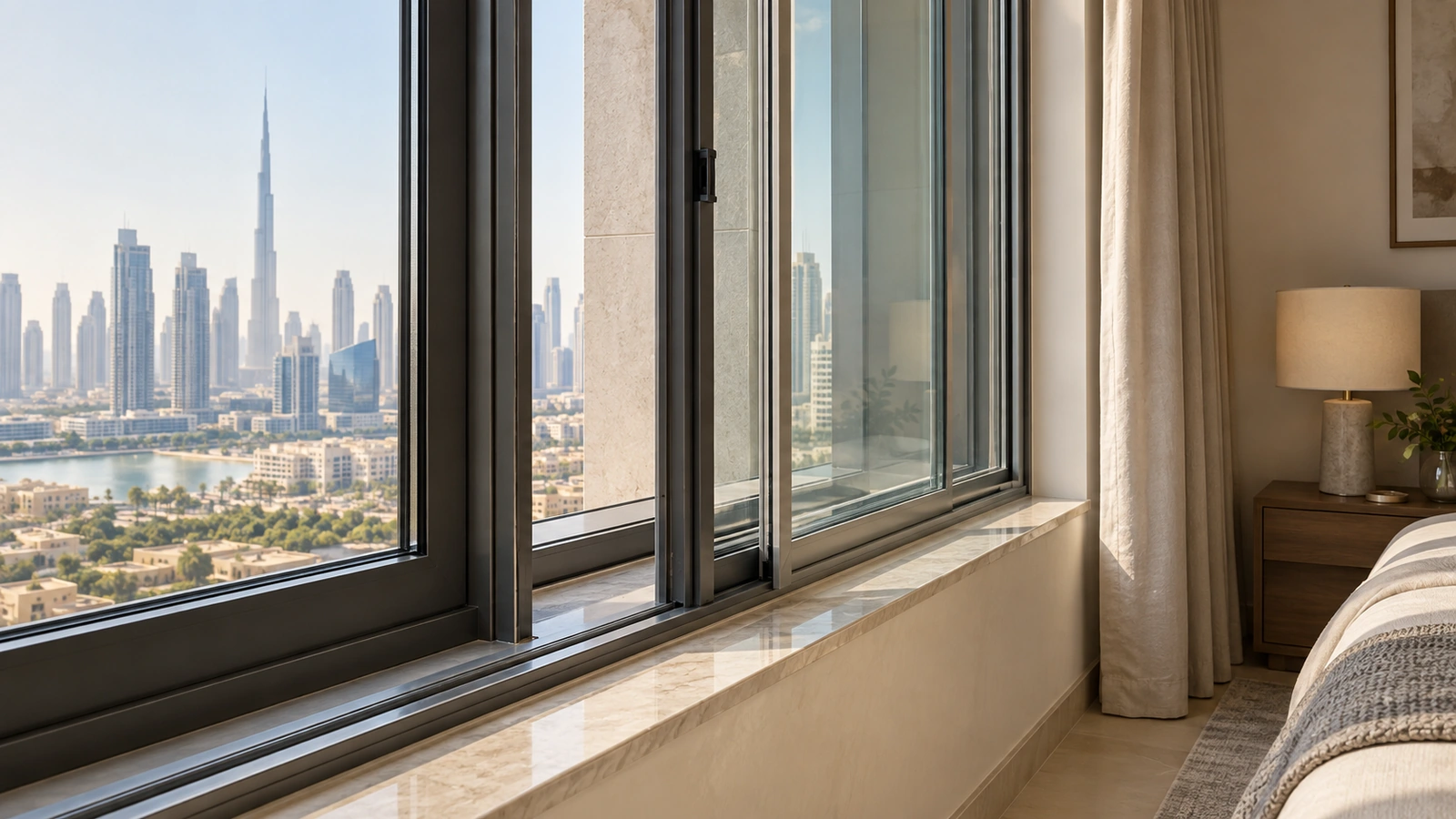
Secondary Glazing in Dubai: Apartment Retrofit and Cost Guide
Planning secondary glazing in Dubai? Compare apartment retrofit options, noise control, humidity, window access and quote costs before ordering.
Read article