
Secondary Glazing in Dubai: Apartment Retrofit and Cost Guide
Planning secondary glazing in Dubai? Compare apartment retrofit options, noise control, humidity, window access and quote costs before ordering.
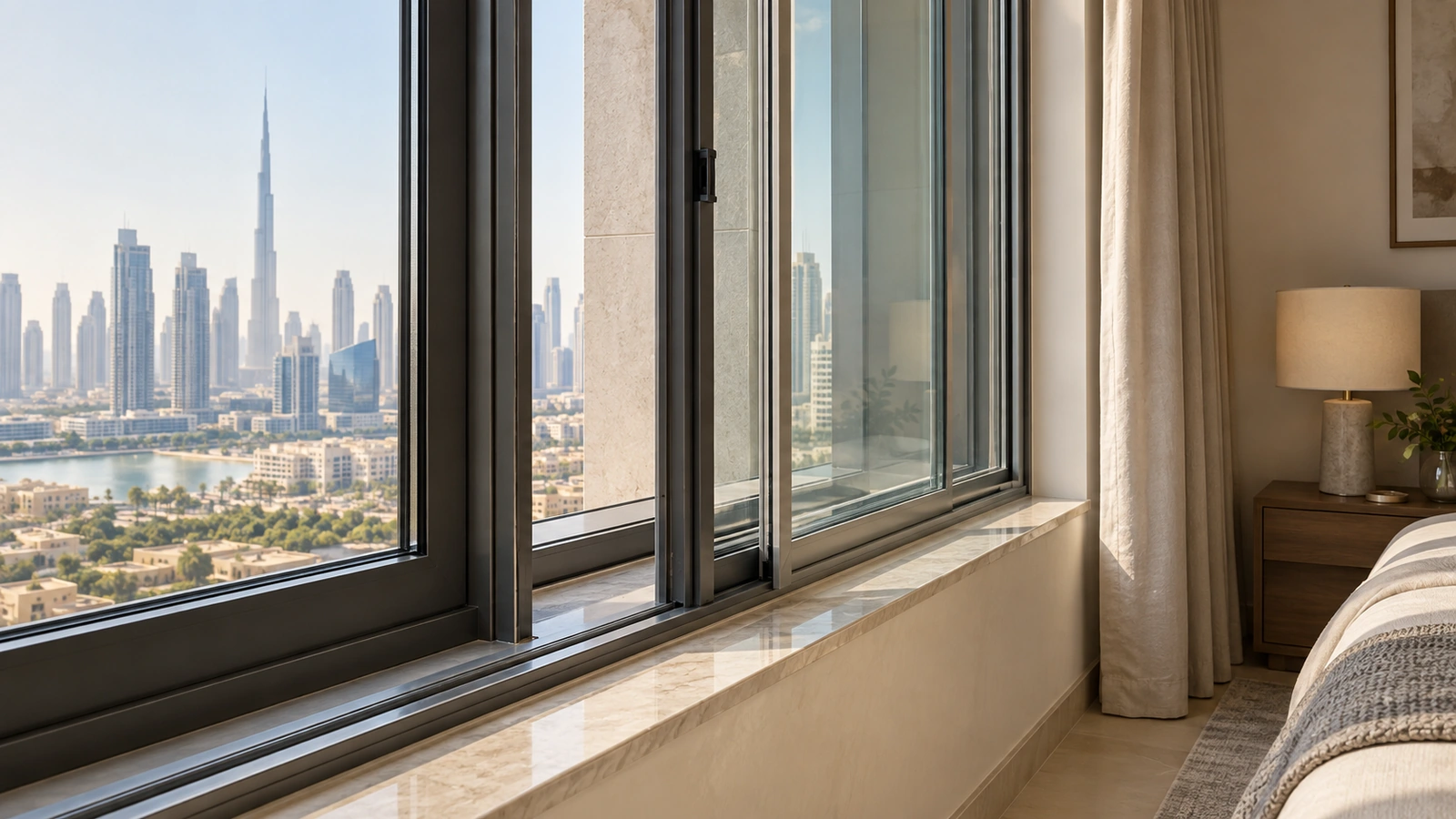
Can secondary glazing help a Dubai apartment?
Secondary glazing adds an independent glazed frame inside an existing window. It is worth assessing when outside noise disturbs a bedroom or home office and replacing the external window is difficult. The original window remains the weather-facing layer; the new internal window creates another enclosed barrier. Suitability depends on the existing frame, reveal depth, ventilation, opening access and the source of the disturbance.
For a Dubai apartment, start with a survey rather than ordering glass from the visible opening size. An extra pane cannot repair a leaking facade or stop noise that mainly travels through walls or ventilation openings. Ask Glass World to assess the existing installation in Dubai and compare a retrofit with double-glazed window replacement before choosing a scope.
Secondary glazing versus replacement double glazing
A replacement insulated glass unit has panes manufactured together as a sealed unit within the main window frame. Secondary glazing is a separate room-side assembly with its own frame, seals and opening mechanism. It takes up internal space and creates additional glass surfaces to clean. These differences matter as much as the glass specification when you live with the installation every day.
Consider secondary glazing when the main frame is serviceable and retaining the external appearance is a project priority. Consider replacement when frames are deteriorated, drainage or weather seals need substantial work, or the opening arrangement itself is unsuitable. If moisture is trapped inside an existing sealed unit, adding another window does not restore that unit. Diagnose the original defect first.
Find the noise path before specifying glass
Record which room is affected, whether the problem is traffic, voices or building equipment, and when it is most noticeable. Note whether the disturbance changes when the existing window is firmly closed. This gives the surveyor a starting point; it is not a substitute for acoustic measurement where a defined outcome is required.
The acoustic result depends on the complete assembly, including glass build-up, separation between windows, frame seals and installation joints. Ask for evidence applicable to the proposed system rather than a headline decibel claim for a different laboratory specimen. Where noise is the main reason for the purchase, agree how the finished room will be assessed. The noise reduction glazing guide explains wider upgrade considerations.
Survey the reveal, sill and opening path
Measurements should be taken at several positions because the reveal may be tapered or out of square. The installer needs to identify the substrate behind paint, plasterboard or decorative cladding and agree a sound fixing arrangement. A slim visible frame still needs adequate support and space for handles, locks and seals.
Check the full travel of both windows with curtains, blinds, furniture and insect screens in their intended positions. A secondary sash that fits on paper may prevent reaching the original handle or cleaning the outer pane. Avoid an arrangement that depends on residents regularly lifting out heavy glass.
- Record reveal depth, sill projection and changes in level.
- Check how each glass surface will be cleaned safely from inside.
- Photograph blind tracks, curtain returns, handles and adjacent joinery.
- Identify designated escape openings and obtain a design that preserves their required function.
Choose an opening style around daily use
Horizontal sliding secondary windows can suit wide openings where a hinged panel would conflict with furniture. Hinged units can provide a larger clear access opening but need room for the leaf to swing. Fixed panels should only be considered where access to the original window and the enclosed surfaces has been resolved.
Ask to operate a sample or inspect the proposed hardware. Assess handle reach, sliding effort, latch engagement and whether a cleaner can access the cavity without specialist dismantling. Match the divisions to the existing window where possible so the combined frames do not create an unnecessarily busy view.
Plan for Dubai humidity and air conditioning
A room-side window changes the temperature and air movement around the existing glazing. In an air-conditioned apartment, the designer should assess humid outdoor air leakage and cold surfaces within the proposed cavity. Do not assume that a detail developed for a cold-climate building will perform identically in Dubai.
Ask the contractor to explain the intended sealing, moisture management and maintenance approach for this specific opening. Preserve the original window drainage and coordinate any required ventilation with the building team. Do not drill new vents or block existing openings as a trial fix. If condensation already occurs, identify its location and cause before enclosing it behind another panel.
Specify safety glass and secure fixings
The glass processor needs the panel dimensions, support arrangement, opening type and intended use before confirming the glass build-up. Low-level glazing, large panels and impact-prone positions need particular design attention. Thickness alone is not a complete safety specification; glass processing and post-breakage behaviour also matter.
Use the toughened and laminated glass comparison to prepare questions, then obtain the project-specific specification from the responsible specialist. Confirm edge finishing, gaskets, setting blocks, fixings and any holes before glass fabrication. Keep product identification and approved drawings for future replacement.
Approvals and installation in an occupied apartment
Before fabrication, check landlord consent and building management requirements for internal alterations, delivery access and work hours. Retaining the external window does not automatically remove the need for permission. Give management a drawing showing the fixing locations and confirm whether the proposed work interfaces with facade components.
Plan the delivery route from loading area to lift and apartment, including panel turning space. Agree dust protection, furniture movement and protection of floors and stone sills. The contractor should inspect the original window before covering adjacent finishes so pre-existing leakage, damage and access restrictions are documented.
What affects secondary glazing cost in Dubai?
A useful quotation separates glass and frame manufacture from survey, installation, access and making good. Window area is only one cost driver: opening hardware, glass build-up, finish, irregular reveals, fixing substrates and restricted delivery routes can change the scope considerably. A per-square-metre figure without those assumptions is a weak basis for comparison.
Ask each bidder to price the same opening schedule. For several similar bedrooms, a first-room mock-up can settle appearance, operation and access before repeating the detail. Compare the overall cost with repair or replacement, including the practical value of retained curtains and finishes.
- Specify the number of openings, approximate sizes and photographs.
- Identify the proposed frame system, opening style, finish and glass build-up.
- List preparation, protection, disposal and making-good responsibilities.
- State any agreed acoustic assessment, warranty exclusions and maintenance requirements.
Handover checks and maintenance
Operate every sash, check that latches engage without forcing the frame and inspect visible perimeter joints. Confirm that the original window can still be reached and that cleaning access works in practice. Where a performance assessment was included in the quotation, complete it under the agreed conditions before closing out the job.
Clean tracks and seals using the system supplier’s instructions. Keep abrasive dust away from moving parts and avoid unapproved solvents on gaskets or coated glass. Report persistent cavity moisture, loose fixings or difficult operation promptly rather than applying additional sealant without a diagnosis.
Questions to answer before requesting a quotation
Can secondary glazing make a room completely silent? No credible proposal should promise that without considering every sound path. Can it be fitted over double glazing? Sometimes, but the survey must establish space, access and a worthwhile benefit. Will it reduce cooling bills? Ask for an assessment of the complete window and room; an extra pane alone is not a guaranteed energy-saving figure.
For a practical enquiry, send room photographs, approximate window sizes, building location, the main problem and any management constraints. Ask Glass World to compare a secondary-glazing proposal with repairing or replacing the existing window. That comparison should establish whether the retrofit solves your actual problem before dimensions and finishes are approved.
Technical reference
The distinction between a separate internal window and replacement glazing is described in Selectaglaze’s secondary glazing overview. Product performance and installation details must be confirmed for the selected system and Dubai project conditions.
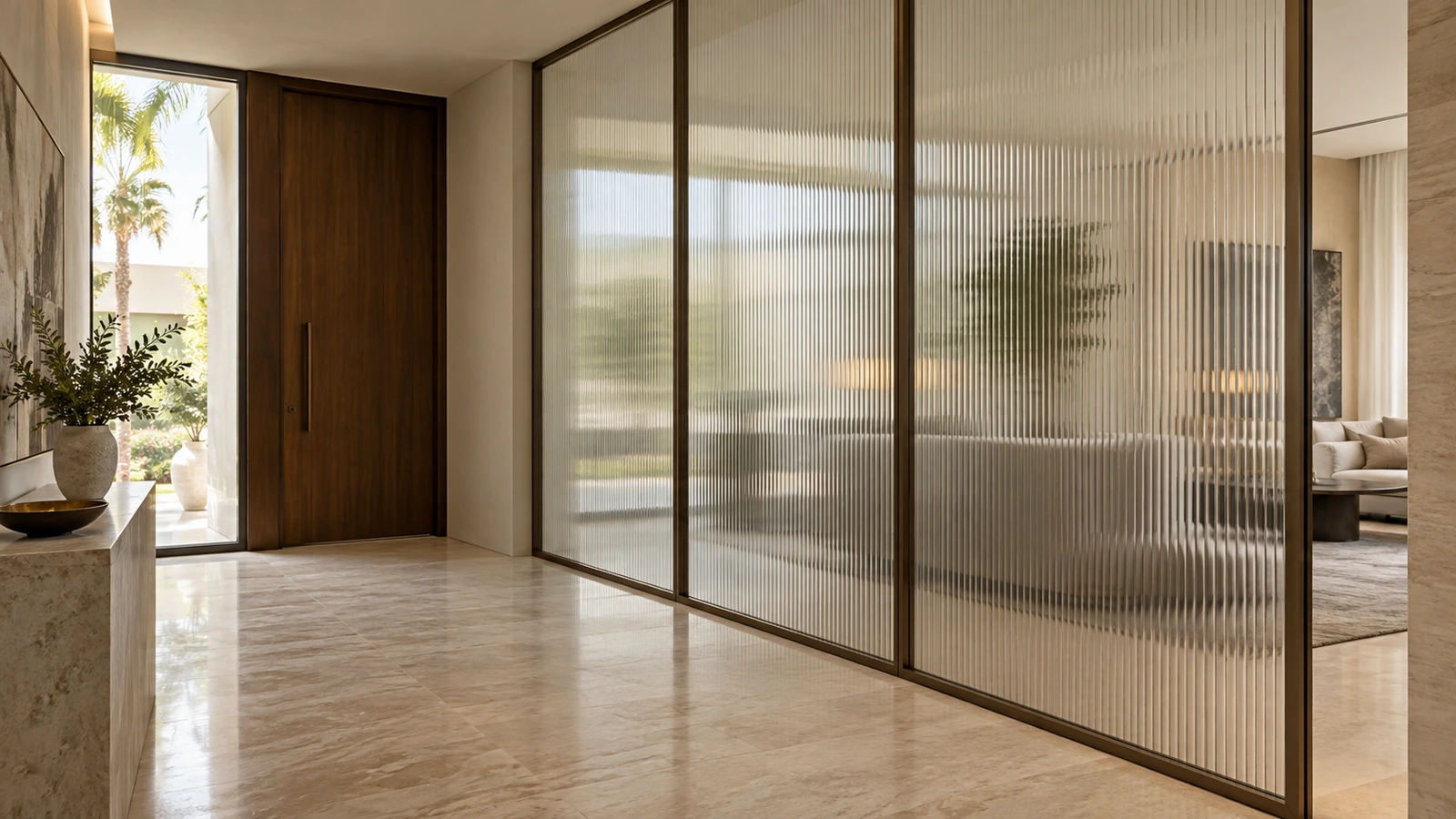
Fluted Glass Partitions in Dubai: Privacy and Cost Guide
Planning fluted glass partitions in Dubai? Compare privacy, rib patterns, safety glass, frames and installation costs before ordering a custom screen.
Read article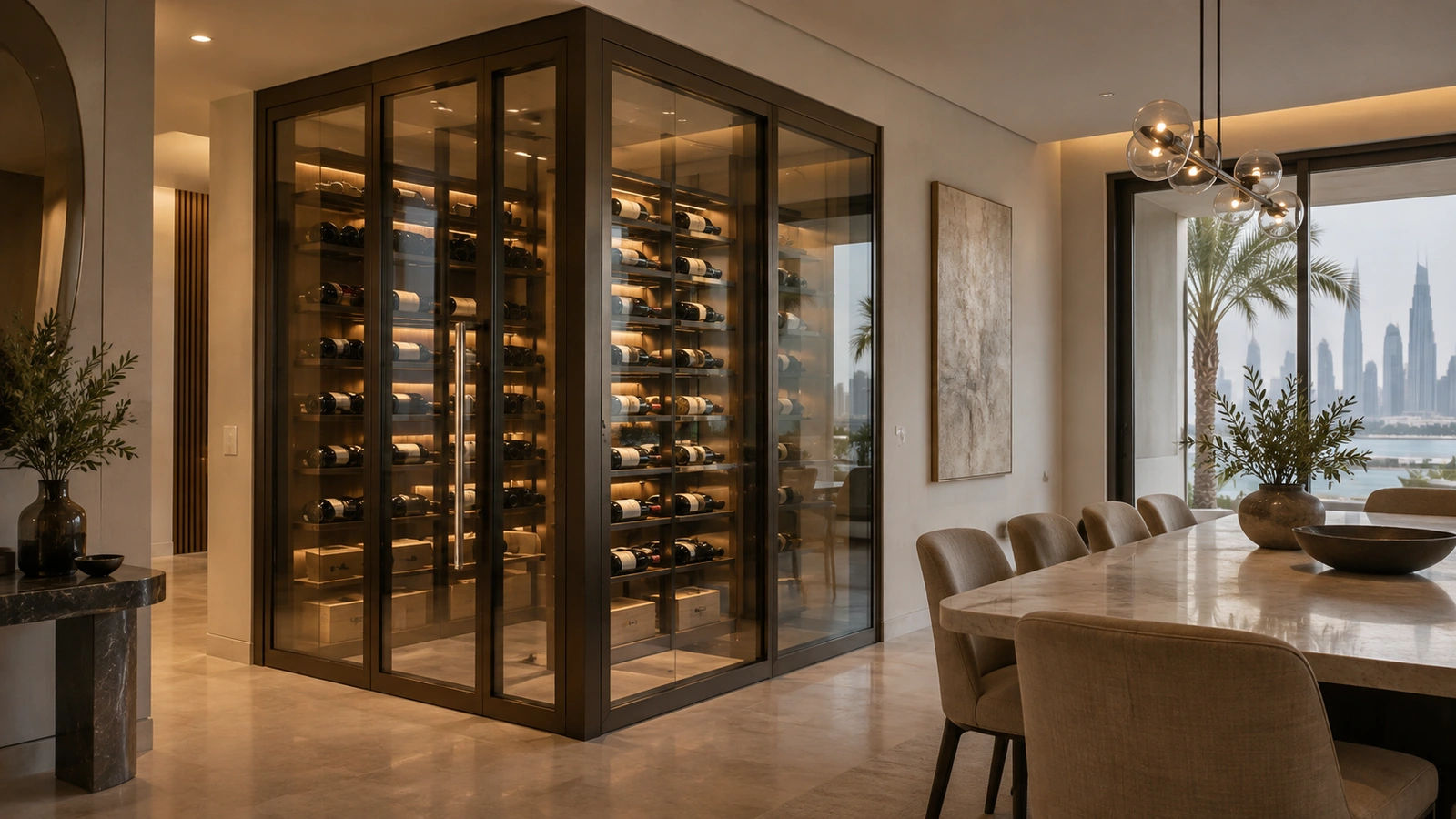
Glass Wine Rooms in Dubai: Insulated Glazing and Cost Guide
Planning a glass wine room in Dubai? Understand insulated glazing, sealed doors, condensation, cooling coordination and quote costs before installation.
Read article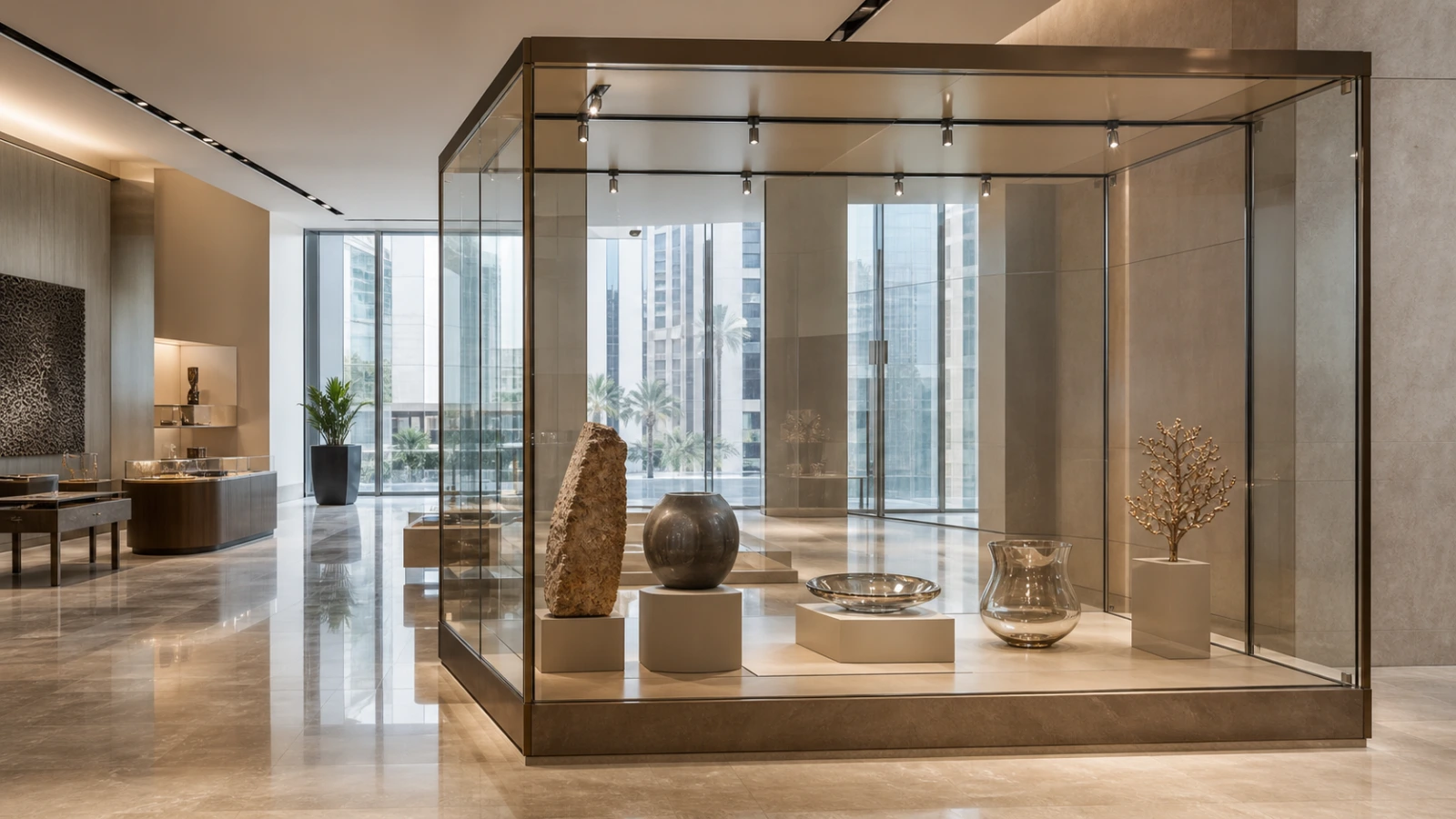
Anti-Reflective Glass in Dubai: Retail Display and Museum Glazing Guide
Specify anti-reflective glass in Dubai for retail displays, galleries and museums with guidance on clarity, lighting, safety, fabrication, cleaning and cost.
Read article