
Glass Louvre Windows in Dubai: Ventilation, Safety, and Installation Guide
Plan glass louvre windows in Dubai with practical guidance on ventilation, safety glass, aluminium frames, weather resistance, security, installation, and cost.
Quick answer
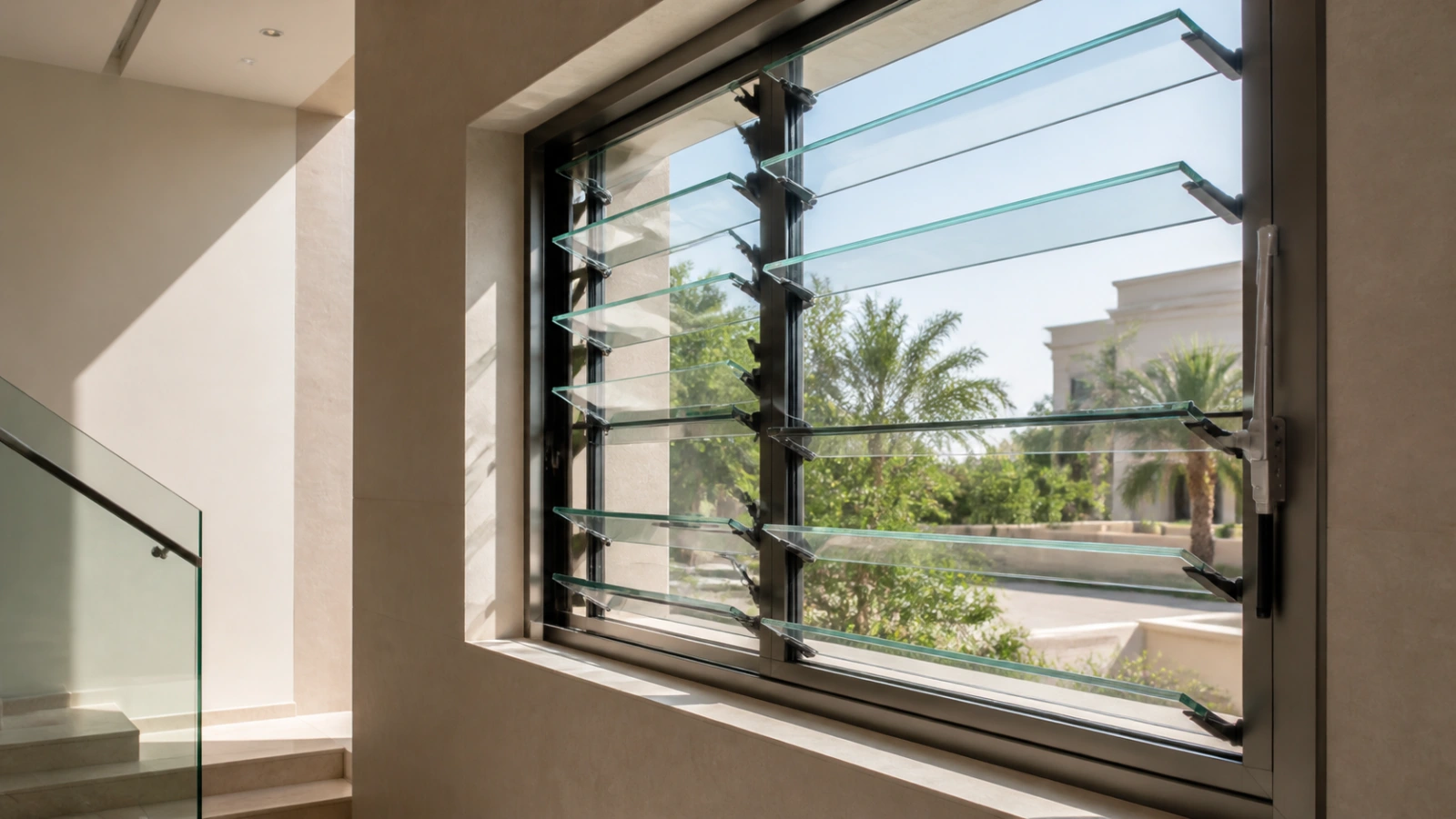
Glass louvre windows use a series of horizontal glass blades that open together to provide controllable ventilation while keeping the opening compact. In Dubai, they can work well in stairwells, utility rooms, bathrooms, service areas, plant spaces, guard rooms and selected villa or commercial openings where airflow is more important than a fully sealed, high-performance window.
A reliable installation depends on more than choosing a blade width. The opening, wind exposure, safety-glass specification, aluminium frame, blade holders, operating mechanism, insect screen, security, drainage, perimeter sealing and cleaning access must be planned as one system. Glass World coordinates aluminium window installation, custom glass fabrication and related glazing work across Dubai and the UAE.
Where glass louvre windows make sense
Louvres are useful where a space needs frequent natural airflow without the swing area of a casement sash. Typical applications include laundry and utility rooms, internal courtyards, stair cores, washrooms, workshops, refuse rooms, service corridors and naturally ventilated ancillary spaces. They can also form a discreet ventilating panel beside a larger fixed window rather than filling the whole opening.
They are not automatically the best answer for every air-conditioned room. Compared with a properly sealed fixed or hinged window, multiple overlapping blades create more joints through which heat, dust, noise and wind-driven rain may pass. Bedrooms, premium offices, road-facing rooms and strongly cooled interiors may need a tighter aluminium window or insulated glazing solution instead.
Specify the glass blades safely
The glass type, thickness and maximum blade length should suit the louvre hardware, opening width, wind exposure and risk of human impact. Toughened safety glass is commonly considered because it is stronger than ordinary annealed glass and breaks into relatively small fragments, but the final specification must follow the system supplier, responsible designer and project requirements. Polished edges reduce sharp handling edges and help the blades seat correctly in their holders.
Every blade must be fabricated to the confirmed finished size before heat treatment. Toughened glass cannot be safely cut, drilled or shortened after processing. Check tint, obscurity or privacy treatment at the same time: frosted or patterned blades may suit bathrooms and service rooms, while clear or lightly tinted glass preserves daylight and outward views. See the practical comparison of toughened and laminated glass when reviewing breakage behaviour.
Match the aluminium frame and operating hardware
A louvre window is a coordinated mechanism. Side channels, blade clips, link bars, pivots, handles or operators and stops must be compatible and rated for the blade quantity and size. Uneven clips, loose pivots or a distorted frame can make blades bind, leave irregular gaps or place concentrated stress on the glass edges.
Choose an aluminium profile and powder-coated finish suited to the building and exposure. The frame should be square, securely anchored and isolated from incompatible materials. Where the louvre sits within a larger curtain wall, shopfront or window assembly, confirm how loads, drainage and perimeter seals transfer into the surrounding system rather than treating the insert as an independent decorative panel.
Plan for Dubai heat, dust and rain
Open louvres provide airflow, but they also admit warm air and fine dust. Consider prevailing wind, nearby roads, landscaping, kitchen exhausts and the room's air-conditioning strategy before choosing their position. A removable insect or dust screen can help in some applications, provided it does not obstruct the operator, trap dirt or make the blades impossible to clean.
Closed blades overlap to shed ordinary rain, yet a louvre should not be assumed to perform like a pressure-tested sealed window. Exposed elevations, high-rise locations and openings facing strong wind-driven rain need particular review. Sill falls, weep paths, perimeter sealant and the connection to external waterproofing must direct water outward. If water appears around an existing opening, inspect drainage and frame joints before blaming the glass alone.
Security, fall protection and access
A low-level or easily reached louvre can create security and fall risks because individual blades may be removable or the opening may be large enough to reach through. Review restrictors, fixed screens, compatible grilles, opening dimensions and the location of handles without creating unsafe glass-to-metal contact. In homes, consider children and pets; in commercial properties, consider public access and after-hours security.
A louvre window must not replace a required guard or balustrade without an approved design. Openings near floor level, stairs, landings or level changes need the protective-barrier requirement checked separately. External cleaning and blade replacement also need safe access, particularly above ground floor or over voids. For difficult elevations, evaluate an approved rope-access solution or other suitable access method.
Survey and installation sequence
A site survey should record the structural opening, finished wall build-up, sill level, reveal depth, squareness, external exposure, drainage route, services, access and connection to adjacent windows or cladding. Agree which party provides the supporting opening and waterproofing. For replacement work, identify the existing frame, blade dimensions, hardware brand where possible and the cause of any breakage or poor closing.
After fabrication, the frame is positioned, packed and anchored without distortion. Perimeter joints are prepared and sealed, then the blade hardware and glass are installed in the specified order. The completed window should be cycled repeatedly to confirm smooth movement, even overlap, secure retention, full closing and safe handle operation. Drainage, screens and surrounding finishes should be checked before handover.
Maintenance and individual blade replacement
Keep blade edges, clips, pivots and linkages clean, and operate the window gently rather than forcing a stiff handle. Dubai dust can collect at the side channels and sill, while aggressive cleaning can dislodge clips or scratch coated aluminium. Follow the hardware supplier's instructions for lubrication; oiling the wrong component may attract grit and worsen wear.
One broken blade can often be replaced if the remaining frame and mechanism are sound and the original size, glass type, thickness, edge finish and tint can be matched. Secure the opening and avoid operating the louvre until fragments and damaged holders have been assessed. Repeated breakage, widespread corrosion, seized linkages or an out-of-square frame may make complete window replacement more dependable than piecemeal repairs. Glass World's glass replacement service can assess the wider assembly.
Glass louvre window cost in Dubai
Cost depends on opening size, blade length and quantity, glass thickness and finish, aluminium profile, powder-coat colour, operator, insect screen, security provisions and whether the unit is new or replacing an existing window. Site variables include access, removal, making good, waterproofing, scaffold or lifting equipment, working hours and the condition of the supporting opening.
Compare quotations using one written scope. Each proposal should state the glass specification, frame system, hardware, finish, screen or grille, measurement responsibility, drainage and sealant work, removal and disposal, access allowance, lead time, testing, warranty and exclusions. A low price for loose glass blades is not comparable with a complete surveyed and installed louvre window.
What to send for a useful quotation
Share the Dubai location, room use, opening width and height, internal and external photographs, floor level, access route, preferred frame colour, privacy requirement and whether the priority is ventilation, daylight, security or replacing damaged blades. For an existing louvre, include close-ups of the handle, side mechanism, clips, blade edges, sill and any leakage or corrosion.
Glass World can review the opening, recommend whether a louvre suits the application, coordinate custom glass and aluminium work and prepare an installation scope. Final dimensions and system details should be confirmed at site before fabrication.
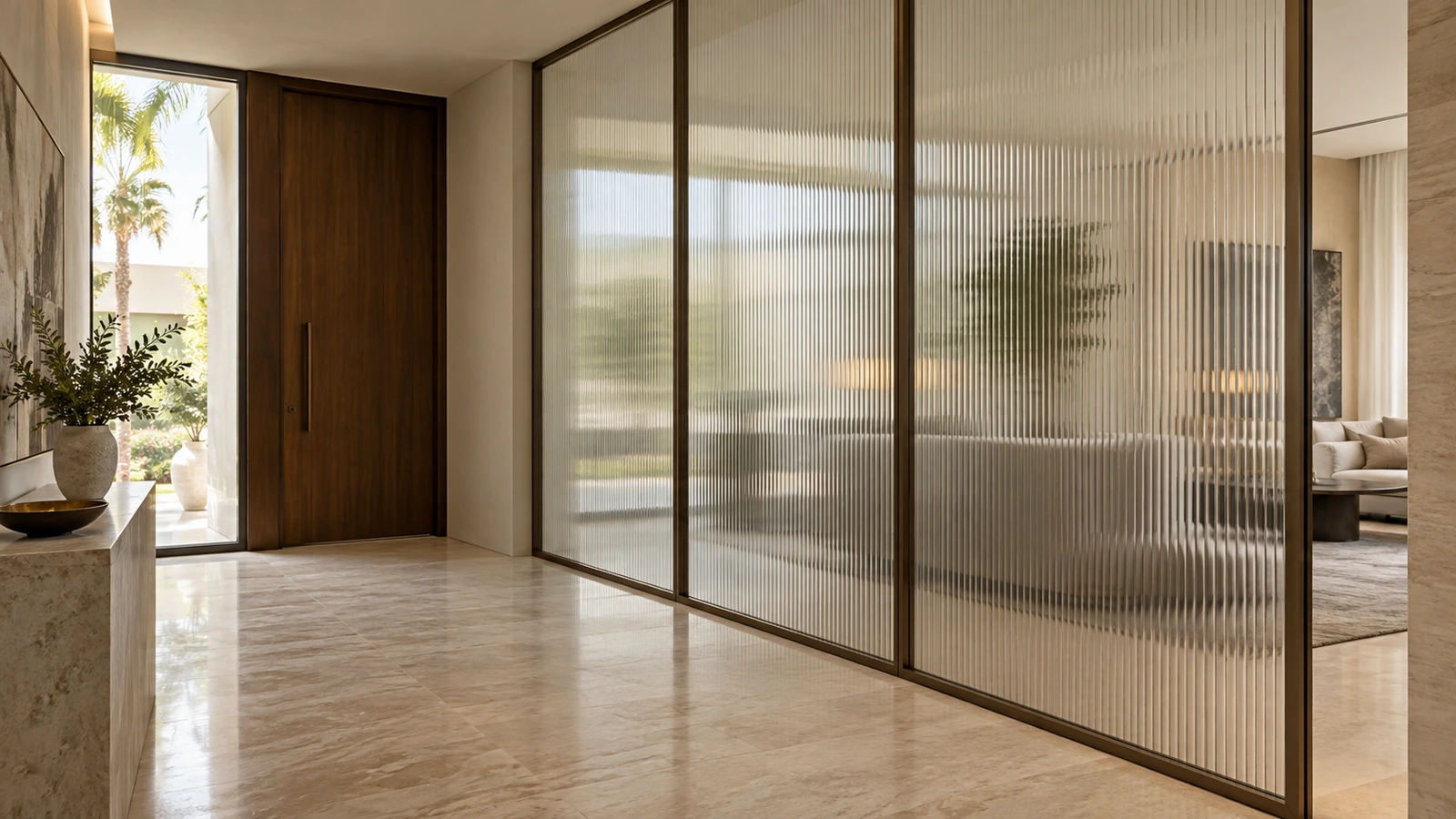
Fluted Glass Partitions in Dubai: Privacy and Cost Guide
Planning fluted glass partitions in Dubai? Compare privacy, rib patterns, safety glass, frames and installation costs before ordering a custom screen.
Read article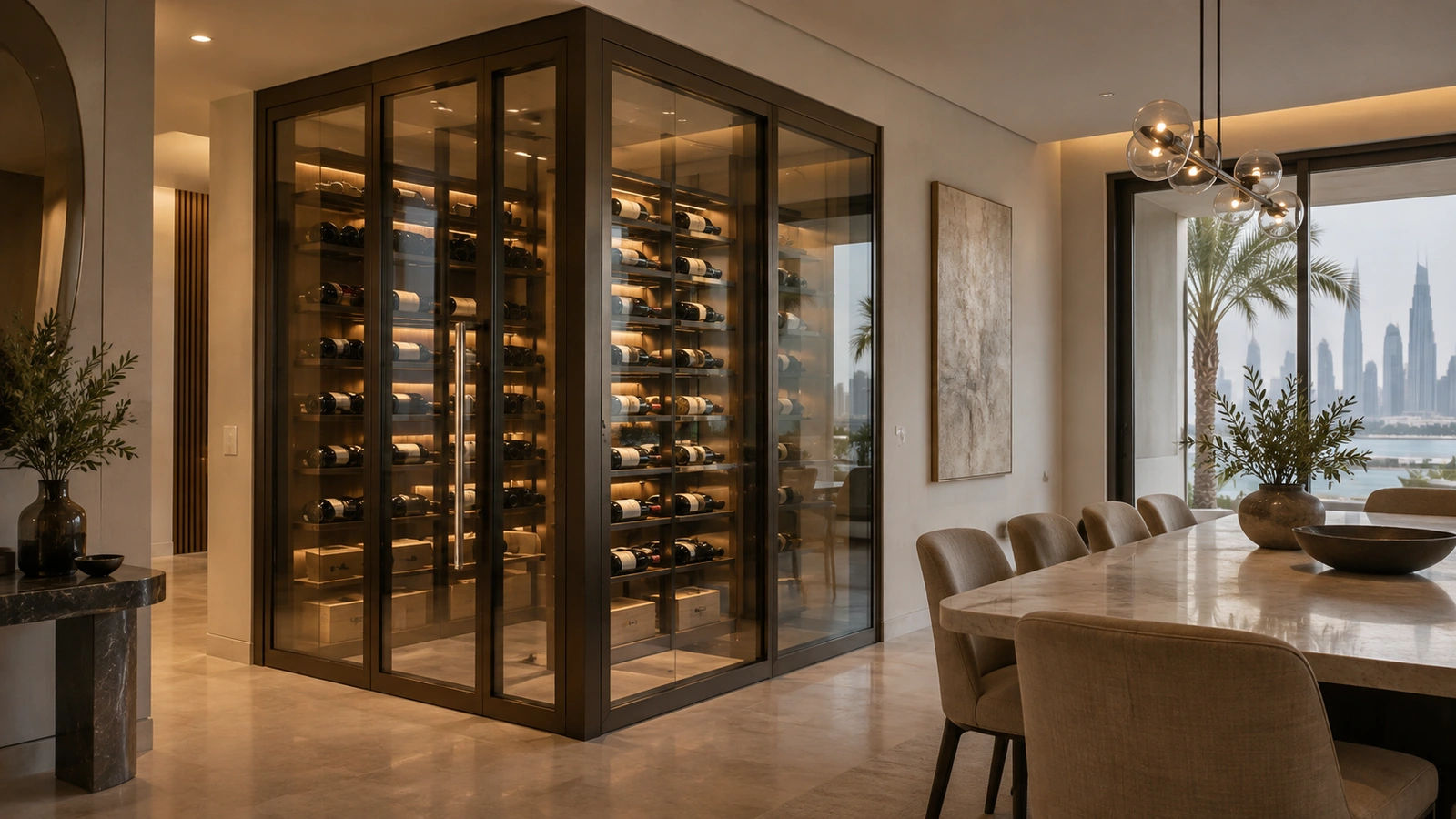
Glass Wine Rooms in Dubai: Insulated Glazing and Cost Guide
Planning a glass wine room in Dubai? Understand insulated glazing, sealed doors, condensation, cooling coordination and quote costs before installation.
Read article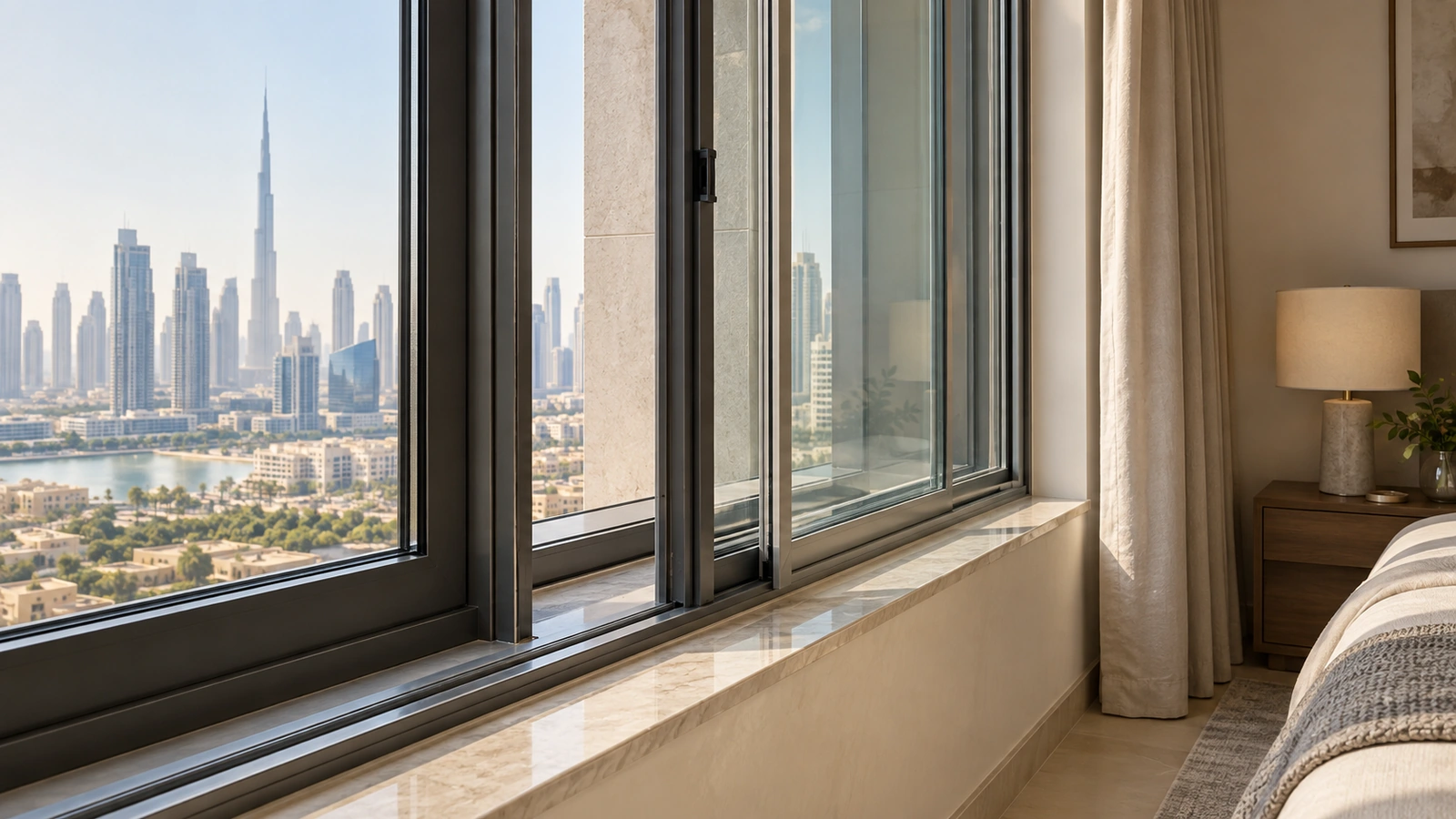
Secondary Glazing in Dubai: Apartment Retrofit and Cost Guide
Planning secondary glazing in Dubai? Compare apartment retrofit options, noise control, humidity, window access and quote costs before ordering.
Read article