
Glass Manifestation in Dubai: Office Partition and Door Safety Guide
Plan glass manifestation for Dubai office partitions and doors with practical guidance on visibility, film design, privacy, installation, maintenance, and fit-out coordination.
Quick answer
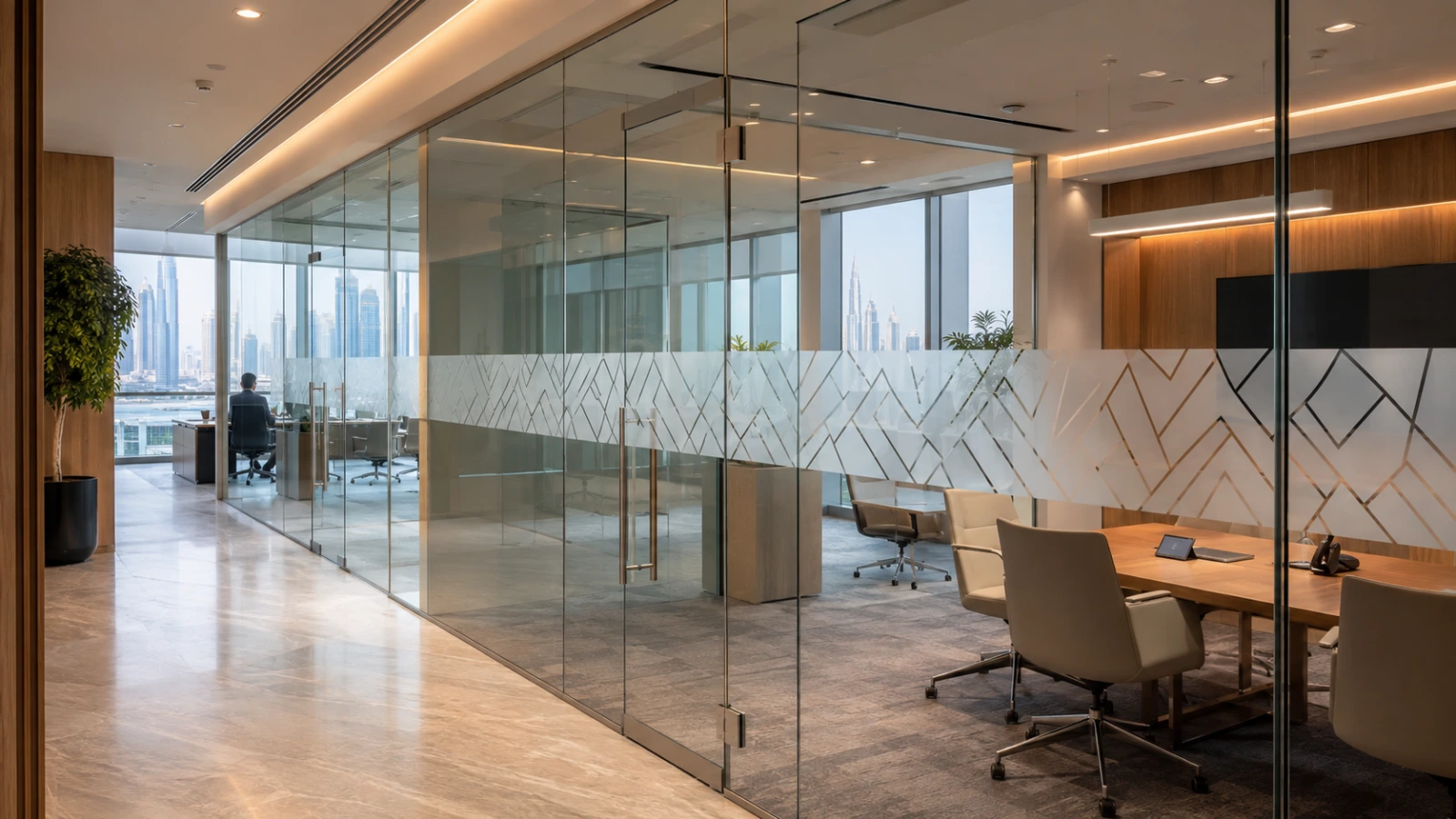
Glass manifestation is a visible treatment applied to full-height glazing so people can recognise partitions and doors before walking into them. In a Dubai office fit-out, it should be planned as part of the glazing package—not added as an improvised decoration at handover. The design needs clear contrast, consistent placement across the circulation route, durable materials, accurate setting-out and coordination with door hardware, privacy requirements and the interior concept.
Glass World supports glass partition installation, replacement and fit-out coordination across Dubai and the UAE. Project-specific requirements should always be confirmed with the consultant, authority criteria and approved drawings before production.
What glass manifestation does
A large clear pane can visually disappear when the spaces and finishes on both sides are similar. Manifestation interrupts that view with a band, repeated motif, dots, stripes or another contrasting pattern. Its first job is to make the glass perceptible along normal walking routes; branding and privacy are secondary benefits that can be integrated into the same design.
Treat glazed doors and fixed panels as one visual sequence. A pattern that is obvious on a meeting-room wall but fades across the door or against a bright reception area can leave the most frequently used panel difficult to see. Review the treatment from both directions, in daylight and under the final artificial lighting.
Visibility, height and contrast
There is no single band height or pattern that suits every project. The consultant should define the applicable criteria, including the number and vertical position of visible zones, minimum contrast and any accessibility provisions. Check the approved fit-out standards for the building or free zone rather than copying dimensions from another office.
Contrast depends on the background as much as the film colour. Pale frosting may read well against dark joinery but disappear against a sunlit room. A pattern with alternating opaque and open areas can remain legible as backgrounds change. Mock up a representative section on the actual glass and view it from the approach distances used by staff and visitors.
Choose the right treatment
Common options include cut frosted film, printed translucent film, opaque vinyl and factory-processed decorative glass. Applied film is flexible for fit-outs because artwork can be replaced without changing the pane, while a processed finish may offer a more permanent surface. Specify the product, opacity, colour, face of application, edge clearances and expected service conditions—not only a visual rendering.
For areas that need more privacy, manifestation can be combined with a broader frosted zone, but the finished design must still provide deliberate visibility. The office glass frosting guide explains privacy coverage and film planning, while office glass partition systems provide the surrounding glazing context.
Coordinate branding without losing the safety function
A brand pattern can make manifestation feel integral to the interior, but very fine lines, widely separated logos or low-contrast colours may not create a reliably visible zone. Start with the visibility requirement, then adapt the approved brand geometry within it. Avoid placing essential wayfinding information only on transparent film where reflections can reduce legibility.
Obtain final vector artwork and written colour references before cutting or printing. Confirm whether logos must face a particular direction, how the pattern continues across mullions and doors, and which elements need to remain centred after trimming. A full-size sample is more dependable than approving colour and opacity from a screen.
Survey partitions, doors and hardware
Survey after the glass, frames and door hardware are installed wherever the programme allows. Record every panel width and height, door handing, patch fittings, handles, locks, access-control readers, seals and manifestation-free edge zones. Numbering elevations prevents similar-looking panels from being mixed during installation.
Door leaves require particular care because handles, push zones and moving edges interrupt the artwork. The pattern should remain recognisable when the door is open or closed and should not conceal safety labels or conflict with hardware. Where partitions are being relocated, coordinate the new film only after the final glass arrangement is confirmed; see the partition relocation guide for sequencing considerations.
Installation quality and site conditions
Glass must be clean, sound and free from incompatible residues before application. Installers protect nearby finishes, establish a consistent datum, align the design across joints and squeegee the film without trapped debris, creases or damaged edges. Film should not bridge moving joints or run over fittings unless the manufacturer and design specifically allow it.
Dust from active fit-out work can spoil the finish, while premature cleaning can disturb newly installed film. Schedule application after heavy works and painting but with enough time for inspection and correction before handover. Restrict the area during work and provide the correct curing and cleaning instructions to the facilities team.
Existing glass, replacement and maintenance
Inspect existing panes for chips, cracks, scratches, failed seals and loose fittings before adding film. Manifestation must never be used to hide damaged glass. If a pane needs glass replacement, identify its safety-glass specification and hardware processing first, then reproduce the approved manifestation so the new panel matches the elevation.
Clean applied film with soft, non-abrasive materials and products accepted by its manufacturer. Avoid blades and aggressive chemicals near printed or cut edges. Periodic inspections should look for peeling corners, shrinkage, bubbling, fading, missing sections and changes in furniture or lighting that reduce contrast along the approach route.
Cost factors and quotation checklist
Glass manifestation cost in Dubai depends on total film area, product type, printed or cut complexity, number of colours, artwork preparation, panel count, access, night-work restrictions, removal of old film and the quantity of doors or hardware interruptions. A simple repeated band is generally quicker to set out than an intricate pattern requiring exact alignment over many panels.
For comparable quotations, provide drawings, Dubai location, photographs, panel schedule, total lengths, required heights, approved artwork, film specification, opacity, installation face, access hours and programme. Ask each offer to state survey, samples, artwork checks, production, installation, protection, waste removal, warranty, exclusions and the process for replacing a single damaged panel later.
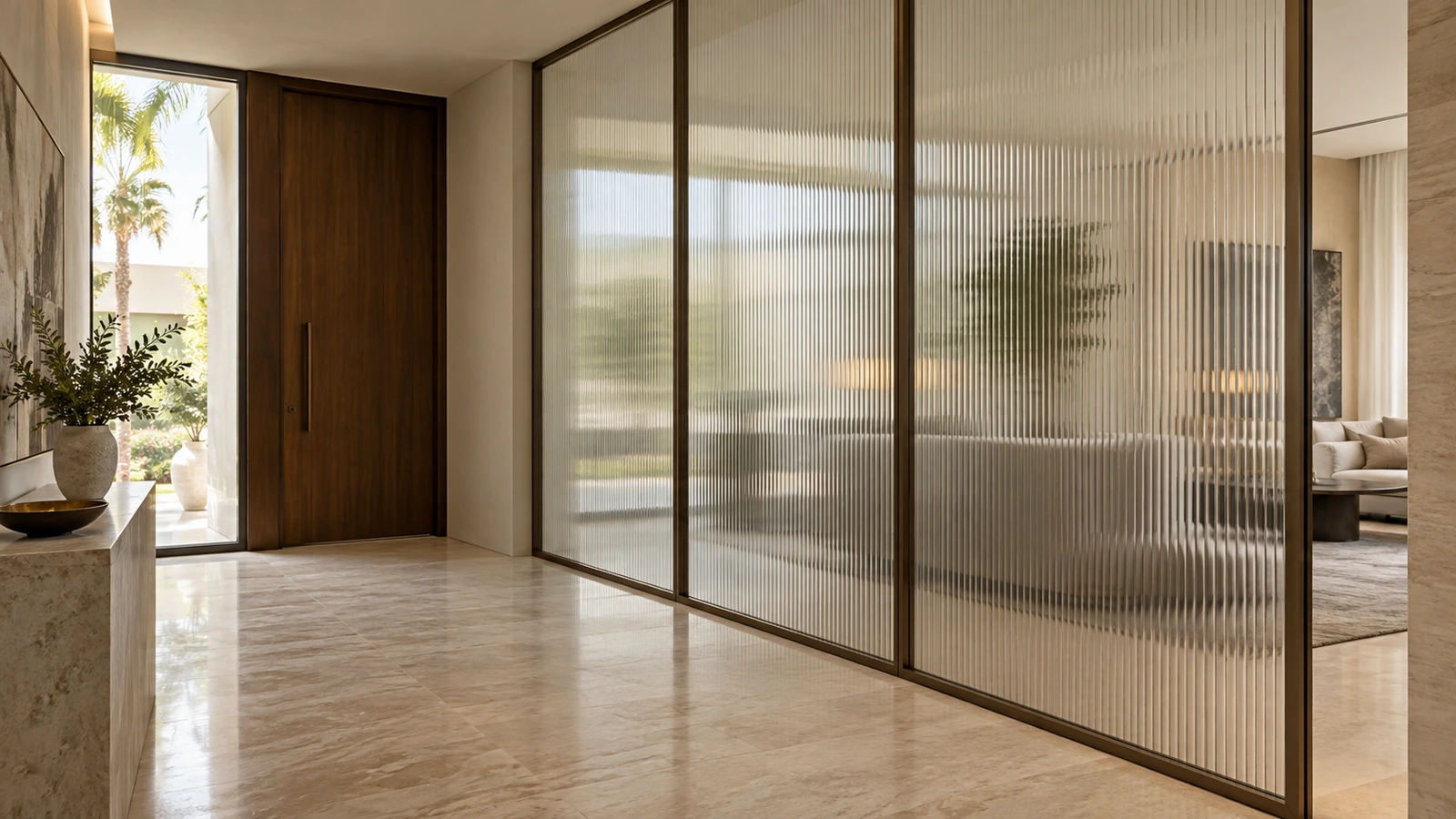
Fluted Glass Partitions in Dubai: Privacy and Cost Guide
Planning fluted glass partitions in Dubai? Compare privacy, rib patterns, safety glass, frames and installation costs before ordering a custom screen.
Read article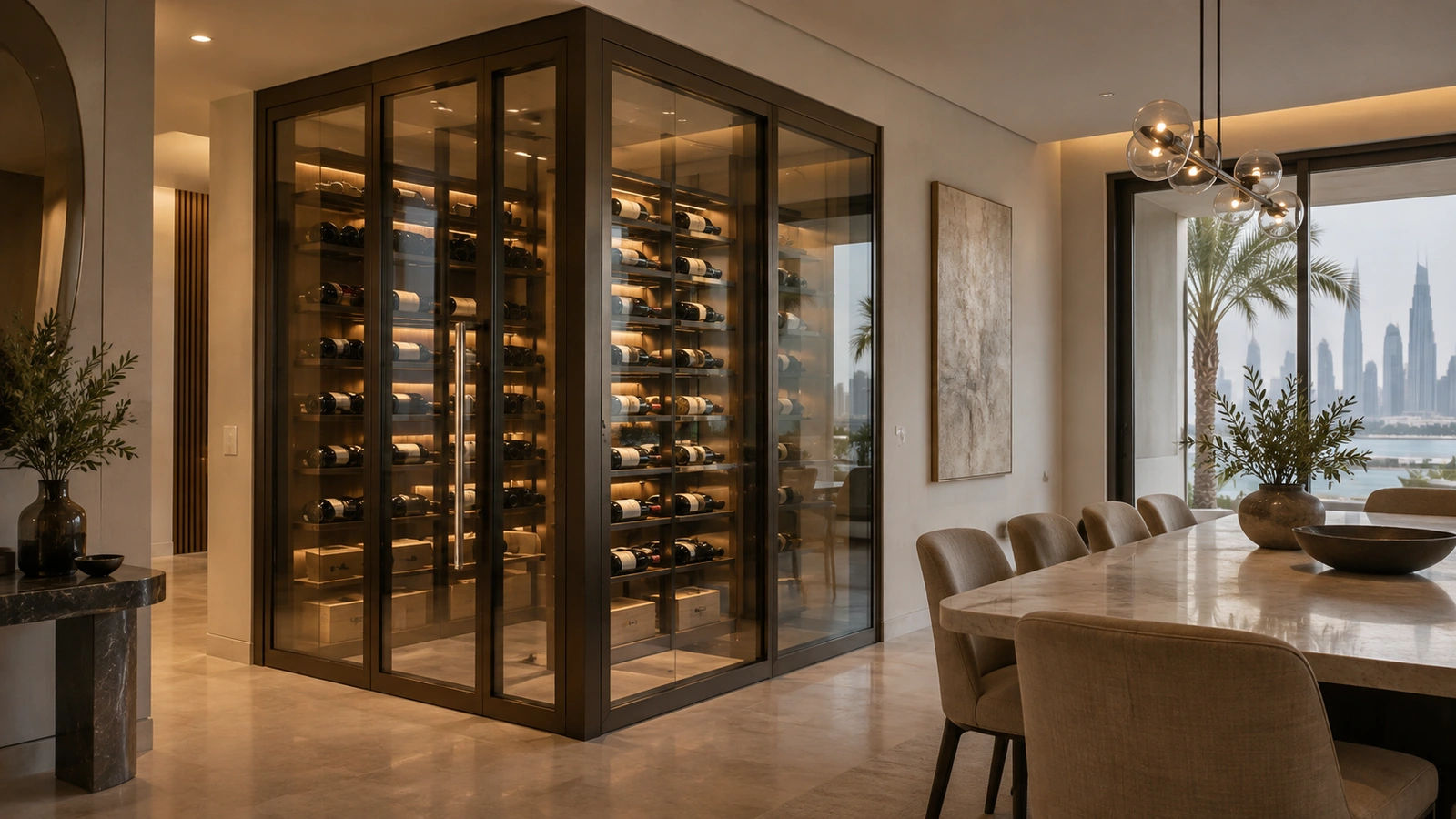
Glass Wine Rooms in Dubai: Insulated Glazing and Cost Guide
Planning a glass wine room in Dubai? Understand insulated glazing, sealed doors, condensation, cooling coordination and quote costs before installation.
Read article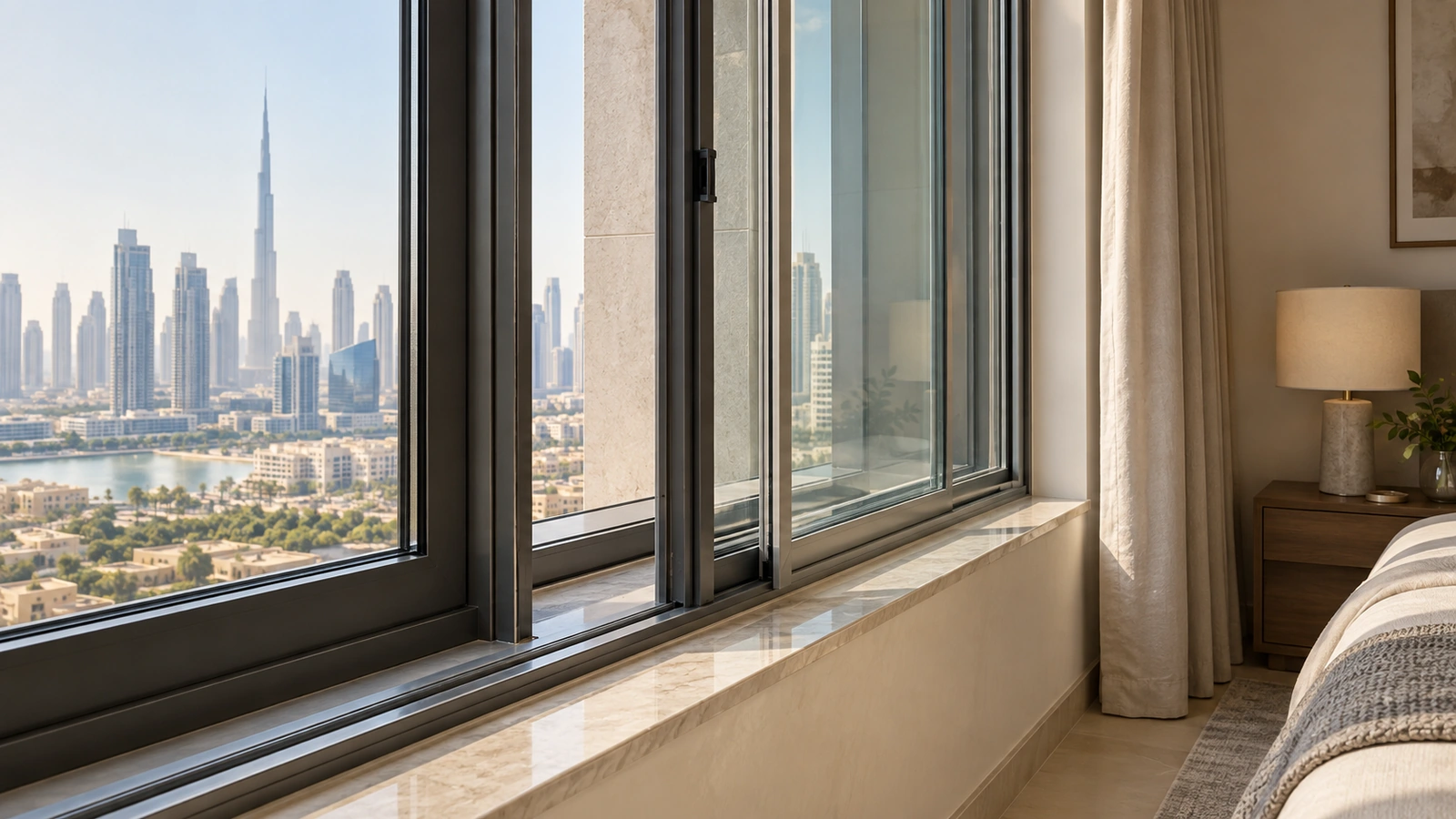
Secondary Glazing in Dubai: Apartment Retrofit and Cost Guide
Planning secondary glazing in Dubai? Compare apartment retrofit options, noise control, humidity, window access and quote costs before ordering.
Read article