
Low-Iron Glass in Dubai: Extra-Clear Glazing and Cost Guide
Choose low-iron glass in Dubai with practical guidance on clarity, edge colour, safety processing, applications, specifications, cost, and quotation scope.
Quick answer
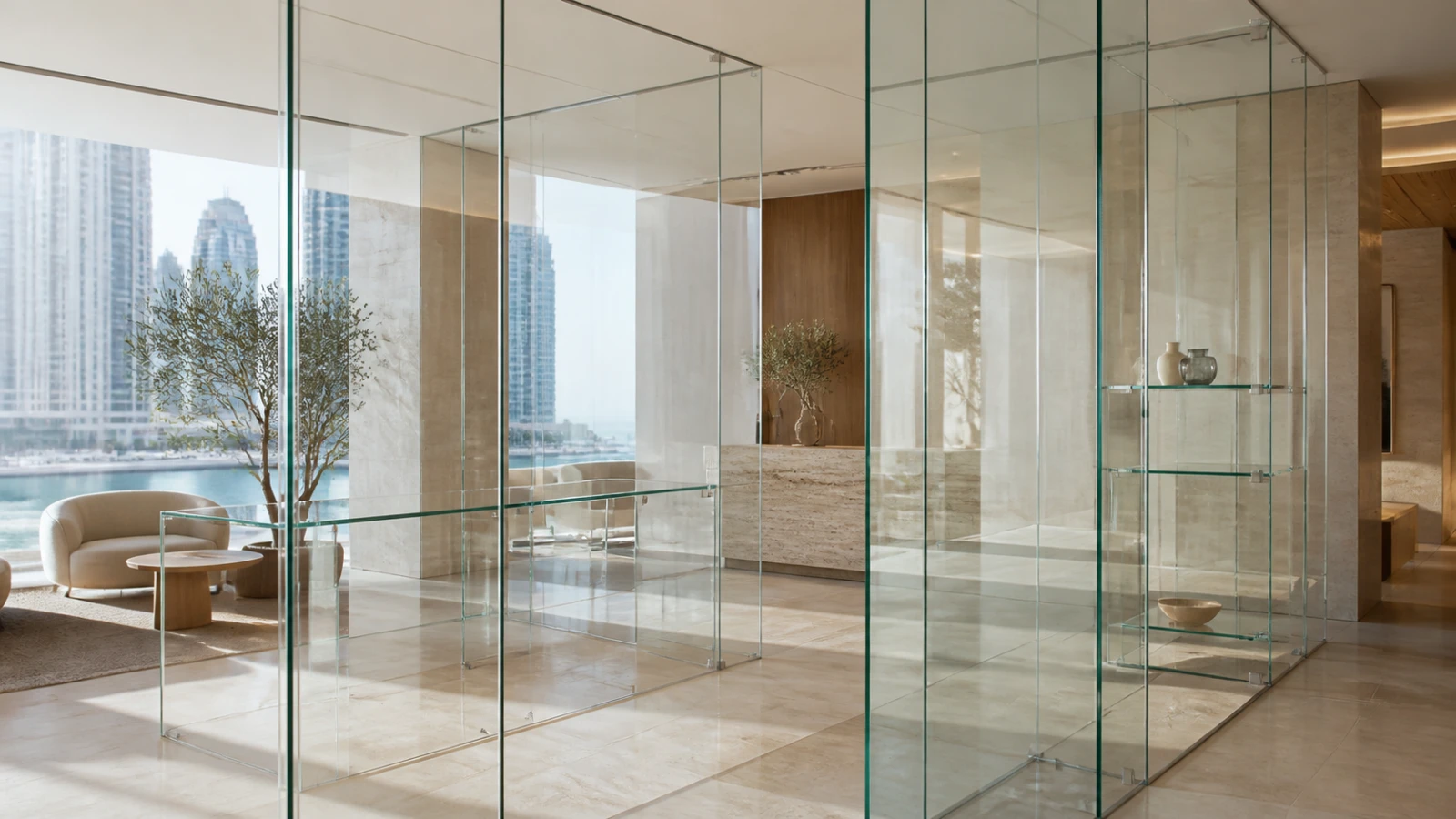
Low-iron glass is made with less iron oxide than standard clear glass, so it transmits colours more neutrally and shows much less of the familiar green cast, especially at exposed edges or through multiple layers. In Dubai, it is often specified when visual clarity matters: premium shopfronts, display cabinets, hotel interiors, villa partitions, balustrades, shower enclosures, mirrors, back-painted glass and architectural features.
It is an optical upgrade, not a safety classification or a substitute for solar-control design. The finished panel may still need to be toughened, laminated, insulated, coated, fritted, drilled or shaped for its location. A useful quotation therefore identifies the base glass, processed build-up, thickness, tolerances, edgework, hardware, installation and visual acceptance criteria together. Glass World coordinates custom glass fabrication and specialist installation across Dubai and the UAE.
What makes low-iron glass look clearer?
Ordinary clear float glass contains iron that gives the material a slight green tone. The effect can be modest when looking straight through one thin pane, but it becomes more noticeable along polished edges, across thicker panels, through laminated or insulated build-ups, and beside white or pale finishes. Low-iron production reduces that green cast and increases visible-light transmission, giving whites, stone, timber, merchandise and artwork a more faithful appearance.
The difference should be judged using representative samples at the proposed thickness and in the actual lighting. A small sample viewed against a white background can reveal edge colour, yet the completed installation may also reflect the sky, interior lighting and adjacent materials. Extra-clear glass remains real glass: reflections, coatings, interlayers, sealants and shadows still influence what a viewer sees.
Where extra-clear glass is worth considering in Dubai
Low-iron glass earns its premium where transparency or accurate colour presentation supports the design or commercial purpose. Jewellery, fashion, automotive and gallery displays benefit when the glazing does not shift product colours. Luxury villa and hotel interiors may use it for full-height partitions, stair balustrades, shelves, doors and shower screens where exposed edges are part of the detail. It is also useful behind pale ceramic paint, digital printing or coloured interlayers because the base-glass tint can otherwise change the intended finish.
It may add limited value in locations where the glass is heavily tinted, obscure, reflective, fritted, covered by film or seen mainly against dark backgrounds. For ordinary service windows, utility screens or concealed panes, standard clear safety glass may meet the functional brief more economically. The decision should follow the viewing distance, background, panel thickness, edge exposure and design priority rather than treating low iron as a universal upgrade.
Low-iron glass is not the same as low-E glass
The names sound similar but describe different performance goals. Low-iron glass is a clearer base substrate with reduced green colour. Low-emissivity, or low-E, glass uses a coating designed to reduce heat transfer and improve the thermal performance of windows or facades. One does not automatically provide the benefits of the other.
A project can combine an extra-clear substrate with a solar-control or low-E coating when both neutral appearance and energy performance matter, subject to coating availability and engineering requirements. Exterior glazing in Dubai must still be assessed for solar heat gain, U-value, glare, reflectance, thermal stress, insulated-unit construction and facade compliance. Review the low-E glass guide before choosing a facade or window build-up only for its apparent clarity.
Specify safety processing and the full glass build-up
Low iron describes the raw glass composition, not how it behaves after impact or breakage. Doors, partitions, showers, balustrades, overhead glazing and other human-impact locations normally require an appropriate safety-glass design. Depending on the application, that may involve toughening, heat strengthening, lamination, heat-soak testing or an insulated unit specified by the responsible designer and applicable project requirements.
Confirm the finished thickness and every layer. Laminated glass includes glass plies and an interlayer; insulated glass adds a spacer cavity and secondary pane; decorative or solar-control products may add coatings, frit or film. These components can introduce their own colour or reflections. The comparison of toughened and laminated glass explains why strength and post-breakage behaviour must be selected separately from optical clarity.
Edges, holes, cut-outs and hardware need early coordination
Polished exposed edges are one of the clearest demonstrations of low-iron glass, but they also make fabrication quality highly visible. Specify the edge finish, arris, corner treatment and acceptable appearance. Panel sizes, holes, notches, hinge cut-outs, socket openings and fixing positions must be finalized before heat treatment because toughened glass cannot be safely cut or drilled afterward.
Hardware and support details should suit the panel size, weight and use. Channels, clamps, patch fittings, hinges, rollers, setting blocks and gaskets must prevent glass-to-metal contact and avoid concentrated edge loads. If the design relies on minimal fixings, the substrate and tolerances need particular attention; visually discreet hardware does not remove the need for structural support. For bespoke machining, see the cut-to-size glass planning guide.
Applications: partitions, railings, showers and displays
For glass partitions, low-iron panels can make adjoining rooms feel visually continuous and keep white walls or pale interiors neutral through the glass. Manifestation, privacy bands, acoustic requirements, doors and seals still need coordination. In balustrades, thick or laminated edges can make the clarity difference more noticeable, although safety loads, support systems and handrails remain the governing requirements.
Shower enclosures may use extra-clear glass to show stone and tile colours accurately, particularly with white marble or light porcelain. Water spots and soap residue are not eliminated, so cleaning access and coating maintenance remain important. Display cabinets and shelves benefit from neutral edge colour and accurate merchandise presentation, but shelf spans, loads, locks, lighting heat and polished-edge protection must be designed with the same care as the optics.
Replacement and colour-matching considerations
Replacing one pane in an existing installation requires a physical match, not only the words clear glass. Check whether the original is standard clear or low iron, plus its thickness, heat treatment, interlayer, coating, tint, ceramic paint, edgework and surface orientation. A new extra-clear pane installed beside standard glass can look conspicuously different, just as a standard replacement can create a green cast within a low-iron assembly.
Photographs help identify the location and damage but rarely confirm the complete specification. Use labels, stamps, drawings, previous purchase records and representative samples where available. For critical shopfronts, feature walls or repeated facade units, agree a sample or visual mock-up before producing the full quantity. Glass World's glass replacement service can survey the assembly and coordinate fabrication details.
Low-iron glass cost in Dubai
Low-iron glass normally costs more than standard clear glass because of the specialized base substrate and supply chain. The final project price is influenced more broadly by pane size, thickness, quantity, toughening or lamination, coatings, polished edges, holes and cut-outs, curved processing, hardware, transport, lifting, access and installation. Large panels and low quantities can carry disproportionate fabrication and handling costs.
Compare quotations on identical specifications. One price may cover only a raw rectangular pane while another includes site measurement, shop drawings, safety processing, polished edges, hardware, removal, delivery, lifting, installation, sealants, protection and handover. Ask suppliers to name the proposed extra-clear product or equivalent, confirm availability at the required thickness, and state any substitution process before ordering.
Quality checks before handover
Inspect the glass in representative daylight and interior lighting after protective films, labels and construction dust are removed. Check overall colour consistency, reflections, edge quality, chips, scratches, roller marks, distortion, coating orientation, interlayer appearance, seals, gaskets, clearances and hardware alignment from the agreed viewing positions. Expectations should follow the applicable product standard and approved sample rather than demanding optical invisibility.
Cleaning methods matter after installation. Avoid blades, abrasive pads and harsh chemicals that can scratch glass, damage coatings or attack sealants. Provide the owner with the glass specification, cleaning guidance, hardware information and warranty so future maintenance or replacement does not depend on guesswork.
What to send for a comparable quotation
Share the Dubai location, application, approximate width and height, quantity, drawings or photographs, floor level, access route, preferred clarity, exposed-edge detail and intended background materials. State whether the panels are for a door, partition, railing, shower, shopfront, shelf, display, mirror backing or external glazing, because each use changes the safety and support requirements.
A useful proposal should define the low-iron substrate, finished build-up, thickness, processing, edgework, holes, coating or interlayer, hardware, tolerances, survey responsibility, sample approval, delivery, lifting, installation, protection, testing, lead time, warranty, exclusions and VAT. Glass World can review the design intent and prepare a surveyed fabrication and installation scope.
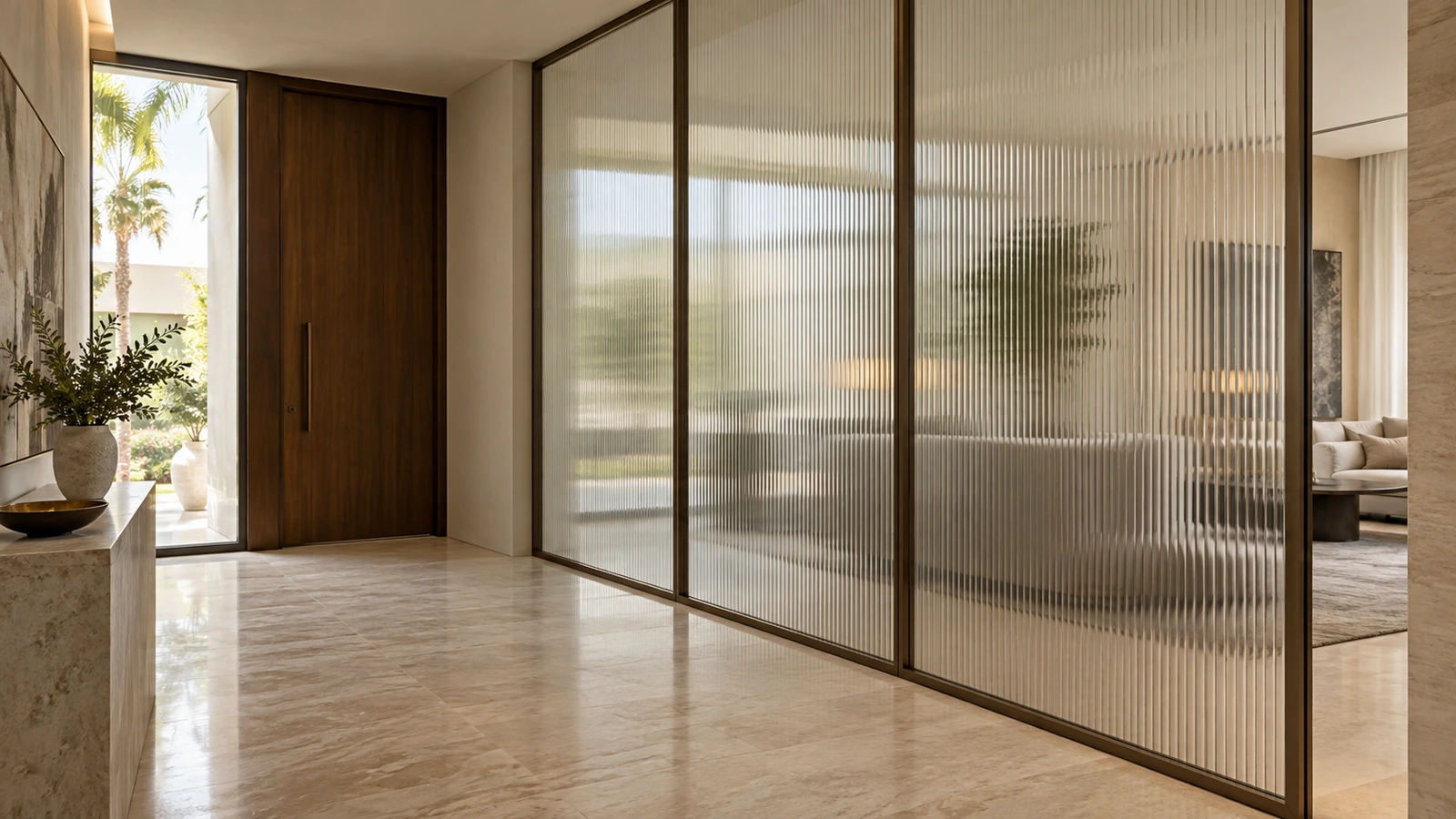
Fluted Glass Partitions in Dubai: Privacy and Cost Guide
Planning fluted glass partitions in Dubai? Compare privacy, rib patterns, safety glass, frames and installation costs before ordering a custom screen.
Read article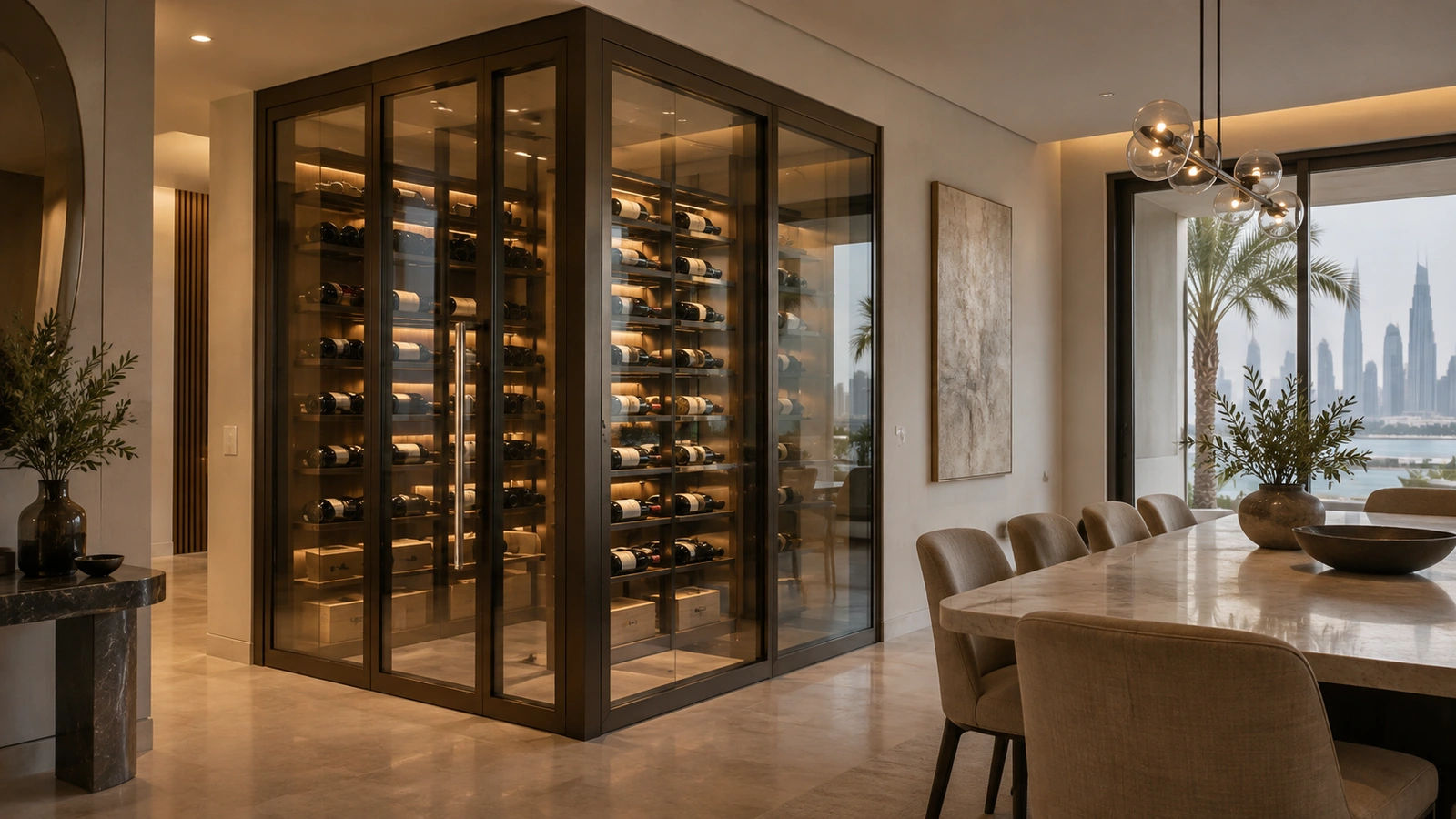
Glass Wine Rooms in Dubai: Insulated Glazing and Cost Guide
Planning a glass wine room in Dubai? Understand insulated glazing, sealed doors, condensation, cooling coordination and quote costs before installation.
Read article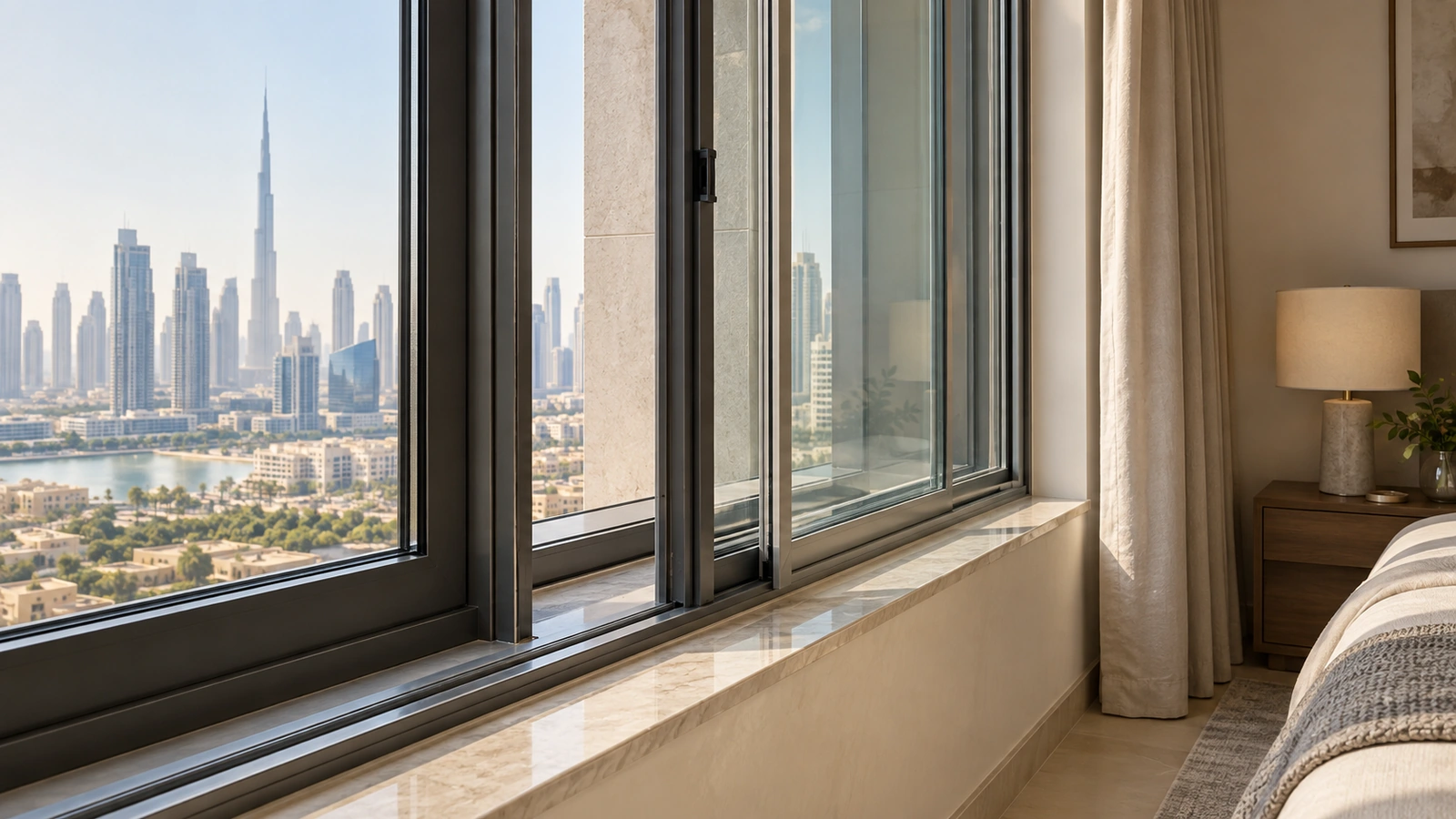
Secondary Glazing in Dubai: Apartment Retrofit and Cost Guide
Planning secondary glazing in Dubai? Compare apartment retrofit options, noise control, humidity, window access and quote costs before ordering.
Read article