
Anti-Reflective Glass in Dubai: Retail Display and Museum Glazing Guide
Specify anti-reflective glass in Dubai for retail displays, galleries and museums with guidance on clarity, lighting, safety, fabrication, cleaning and cost.
Quick answer
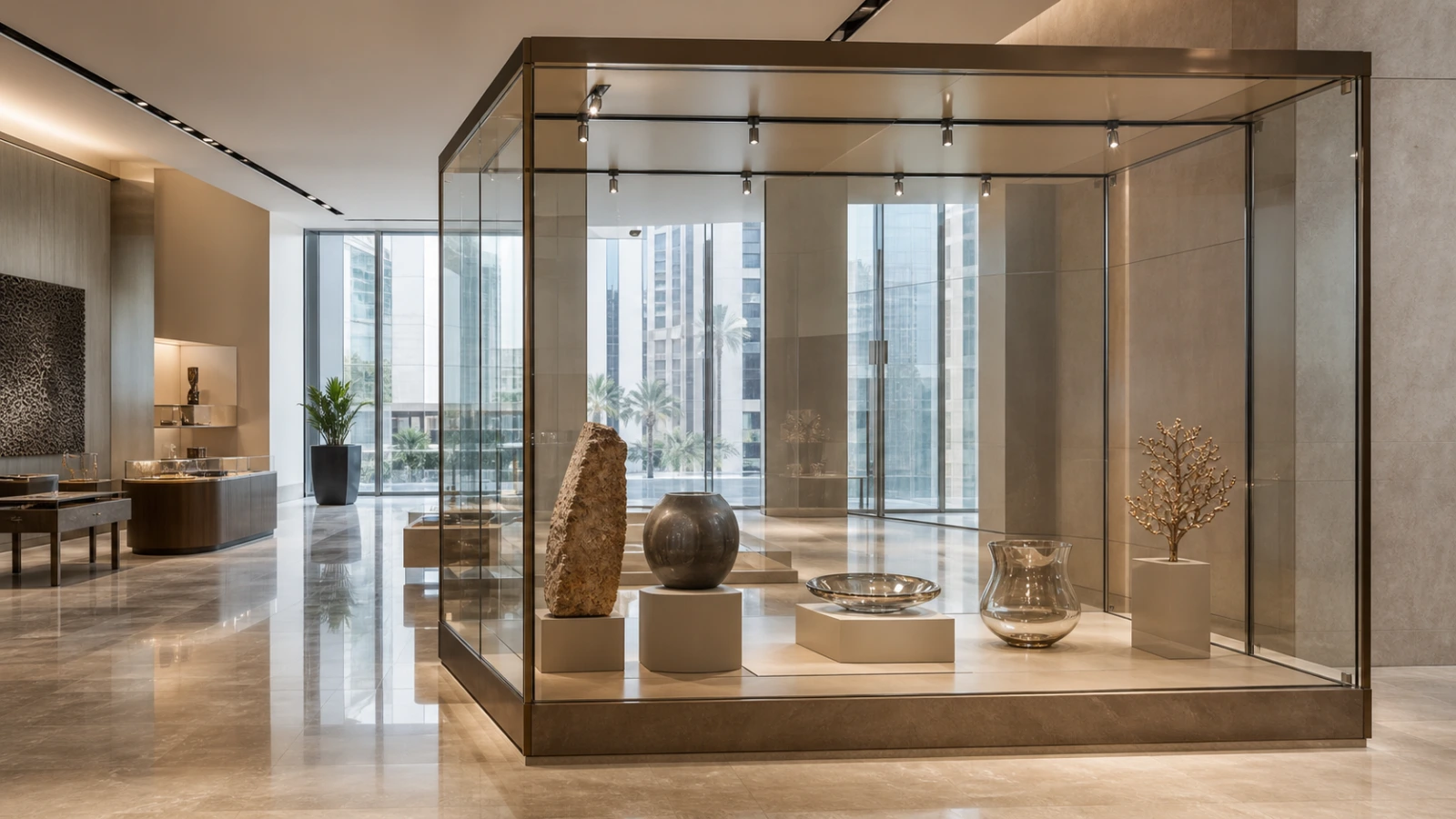
Anti-reflective glass uses optical coatings to reduce surface reflections, helping visitors see merchandise, exhibits or interiors more clearly. It can add real value to Dubai jewellery displays, luxury shop windows, museum cases, galleries, observation areas and premium showrooms where conventional glass reflects bright lighting or surrounding architecture. It does not remove every reflection, and its success depends on glass specification, viewing angles, lighting and the complete display design.
Treat anti-reflective glass as a specialist processed product rather than a standard clear pane. Confirm the required safety build-up, coating faces, dimensions, edgework, fabrication, support system, cleaning method and replacement strategy before ordering. Glass World can coordinate custom glass fabrication, retail glazing installation and architectural glass work across Dubai and the UAE.
What anti-reflective glass actually does
Every ordinary glass surface reflects part of the light that reaches it. A pane has two principal surfaces, so reflections from lights, windows, people and bright finishes can overlap the item behind the glass. Anti-reflective coatings are designed to reduce those reflections across a specified wavelength range, improving light transmission and visual contrast through the pane.
The result should be evaluated as reduced reflection, not invisible glass. Residual colour and reflections can remain at oblique angles or under intense point lighting. Performance also varies by product and build-up. Ask suppliers for stated reflection and light-transmission data, sample size, coating orientation and the conditions under which the values are measured rather than relying only on marketing descriptions.
Where reduced-reflection glazing earns its cost
Anti-reflective glass is most useful where the view through the glass is central to the visitor experience or sale. Jewellery, watches, art, collectibles, museum objects, vehicle displays and premium product launches benefit when distracting reflections are controlled. It can also help at internal viewing windows, broadcast studios and selected feature partitions where visual fidelity matters more than a conventional glazed appearance.
Not every shopfront needs it. A normal facade that prioritises solar control, privacy, impact resistance or budget may perform better with a conventional coated or laminated product. Large external elevations also introduce weathering, replacement, heat-treatment, insulation and coating-durability questions. Define the exact viewing problem first, then compare a physical mock-up with high-quality low-iron glass and standard clear glass under the intended lighting.
Anti-reflective glass versus low-iron glass
Low-iron glass reduces the green tint associated with standard clear glass, especially at polished edges and through thick or laminated build-ups. It improves colour neutrality but does not by itself provide the same reflection reduction as an optical anti-reflective coating. The two technologies solve different problems and may be combined when both colour accuracy and low reflection are important.
For a display case, low-iron substrates can keep white objects and lighting more neutral while anti-reflective surfaces improve viewing. For a decorative partition, low-iron glass alone may be sufficient. Review the low-iron glass guide and compare full-size samples against the actual materials, light sources and sightlines before final approval.
Coordinate lighting before approving the glass
Glass cannot compensate for poorly positioned lighting. Spotlights aimed toward the viewer, bright digital screens opposite the display and sunlit entrances behind circulation paths can still create visible glare. The interior designer, lighting consultant and glazing specialist should review luminaire positions, beam angles, colour temperature, dimming scenes and background finishes together.
A practical mock-up should be viewed from standing and seated heights, close and distant positions, and the main approach routes. Test daytime and evening scenes because Dubai storefronts may face strong external daylight during trading hours and intense internal lighting after dark. Photographing the sample from only one ideal angle is not a reliable approval method.
Choose the complete safety-glass build-up
Display glazing may be close to customers, doors, circulation routes or valuable objects. The responsible designer should specify whether the pane must be toughened, laminated or use another tested safety build-up based on impact risk, panel size, support and post-breakage requirements. Security, forced-entry delay, acoustic control and UV filtering may require additional layers that affect colour and reflection performance.
Ask whether the selected coating can be heat treated, laminated, bent or incorporated into an insulated unit, and which surface positions are permitted. Not all products can undergo every process. A generic request for anti-reflective safety glass is incomplete without the required make-up, nominal thicknesses, interlayer, processing, coating faces and applicable project criteria. The toughened versus laminated glass guide explains the basic safety distinction.
Design the case, frame and joints around the glass
Glass size, edge support, deflection, doors, hinges, locks, seals and shelf loads need coordinated detailing. Large display panes may require discreet framing or engineered supports even when the design intent is visually frameless. Hardware must avoid concentrated stress and direct glass-to-metal contact, while tolerances must allow installation without forcing a pane into an opening.
For museum or conservation cases, air leakage, humidity control, ventilation, material emissions, pest management and access for curators can be as important as clarity. Retail cases may prioritise rapid staff access, secure locks, concealed lighting and daily cleaning. Agree removable panels and replacement routes before joinery, ceilings or finished floors make handling difficult. See the retail glass display cabinet guide for wider case planning.
Fabrication and installation need strict handling
Final dimensions, holes, notches, edge finishes and coating faces should be shown on approved shop drawings. If heat-treated glass is required, cutting and drilling must be completed before toughening. Fabricators and installers should know which surfaces carry exposed coatings and use compatible interlayers, gaskets, tapes, sealants and cleaning products.
Inspect every pane under agreed lighting before installation for coating marks, scratches, edge damage, distortion and colour variation. Store glass dry, separated and protected from abrasive contact. During installation, use clean approved suction equipment and prevent sealant, mortar dust, metal swarf or adhesive residue from reaching the optical surfaces. Finished areas need protection from follow-on trades until handover.
Cleaning and maintenance
Specialist optical coatings may need more controlled cleaning than ordinary shopfront glass. Follow the glass manufacturer's written method for water quality, detergent, cloths, squeegees and stain removal. Avoid blades, abrasive pads, harsh chemicals and unapproved polishing compounds unless the supplier expressly permits them. Train housekeeping or retail teams and keep the instructions in the handover file.
Dust, fingerprints and hard-water marks can undermine the visual benefit even when the coating is performing correctly. Design cases so staff can safely reach all faces without removing heavy displays unnecessarily. Keep a record of the exact product, batch, coating orientation and approved cleaner so future maintenance or replacement does not depend on visual guesswork.
Plan for replacement and colour matching
A damaged anti-reflective pane may be difficult to match years later if the original product is discontinued or its coating appearance changes. Retain approved samples, data sheets, panel schedules, shop drawings and processing records. For repeated modules, consider whether a spare pane is justified, especially where overseas sourcing or specialist fabrication creates a long lead time.
Replacing one pane should reproduce dimensions, glass make-up, edgework, holes, coating faces and optical appearance. Adjacent panels and display lighting should be checked before approving the match. Glass World can coordinate glass replacement and precision fabrication, but manufacture should follow verified records and site dimensions rather than copying an approximate visible opening.
Anti-reflective glass cost in Dubai
Cost depends on product performance, pane size, thickness, safety build-up, low-iron substrate, heat treatment, lamination, holes, notches, polished edges, coating availability and order quantity. Specialist sourcing, samples, mock-ups, breakage allowance and replacement lead time can materially affect a small premium display package. Frames, joinery, doors, locks, lighting, delivery access and installation protection belong in the total project budget.
Compare quotations against the same written specification. Each offer should identify the manufacturer or approved equivalent, reflection and transmission data, glass make-up, coating faces, processing, tolerances, samples, fabrication, hardware, seals, delivery, lifting, installation, cleaning, warranties and exclusions. A square-metre pane price cannot be compared directly with a complete tested and installed display system.
What to send for a useful quotation
Share the Dubai project location, intended use, drawings, pane sizes, display value and security needs, principal viewing directions, lighting layout, surrounding finishes, safety requirements, desired optical performance, hardware concept, installation access and programme. For replacement work, include wide and close photographs, original documents, glass stamps, damage details and measurements only as preliminary information until a site survey is complete.
Glass World can review the visual target, glass build-up, fabrication, support details, lighting interfaces and installation constraints for retail, showroom, gallery and specialist interior glazing. Early sample and mock-up approval gives designers and owners a more dependable basis for balancing clarity, safety, durability and budget.
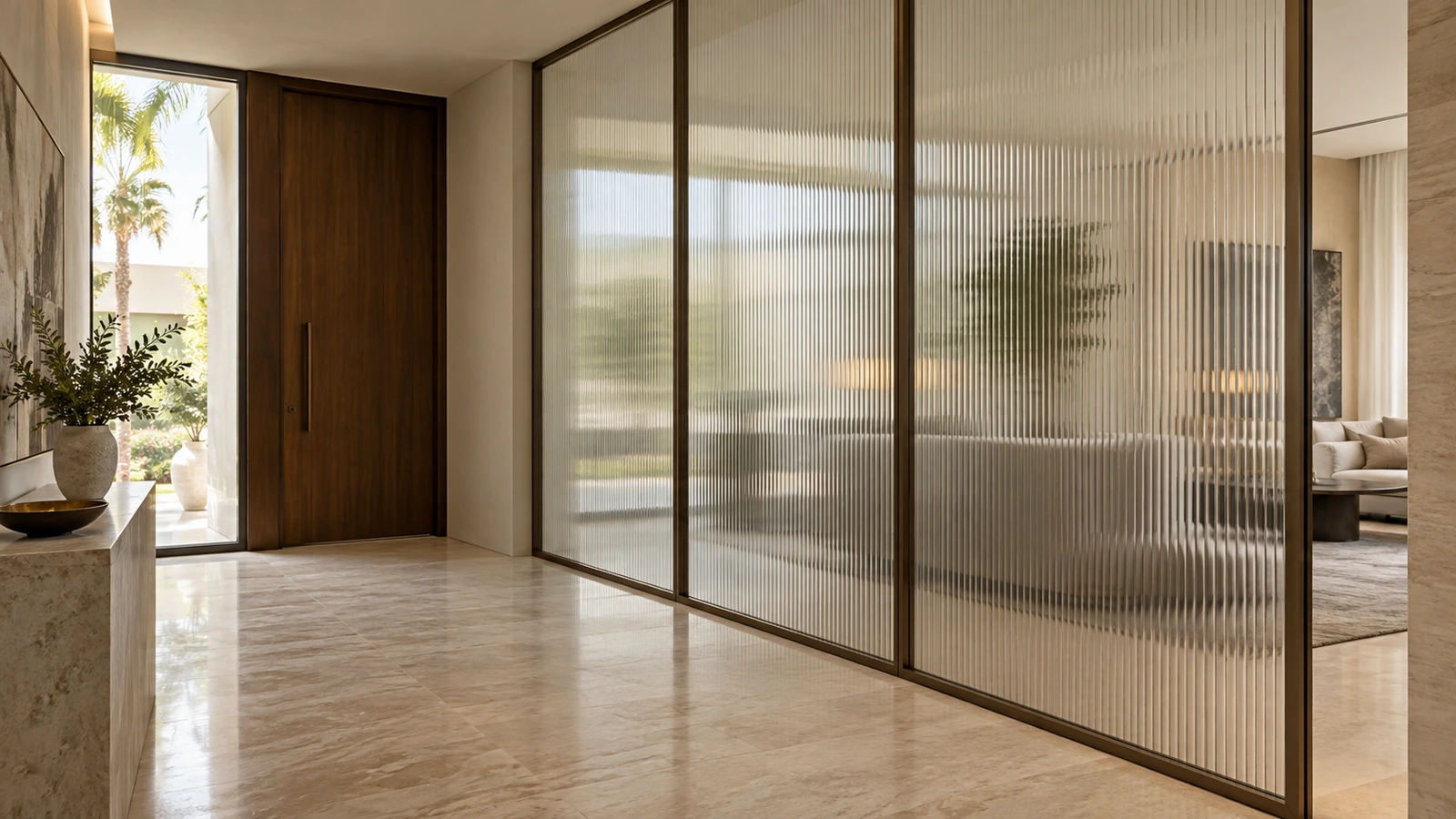
Fluted Glass Partitions in Dubai: Privacy and Cost Guide
Planning fluted glass partitions in Dubai? Compare privacy, rib patterns, safety glass, frames and installation costs before ordering a custom screen.
Read article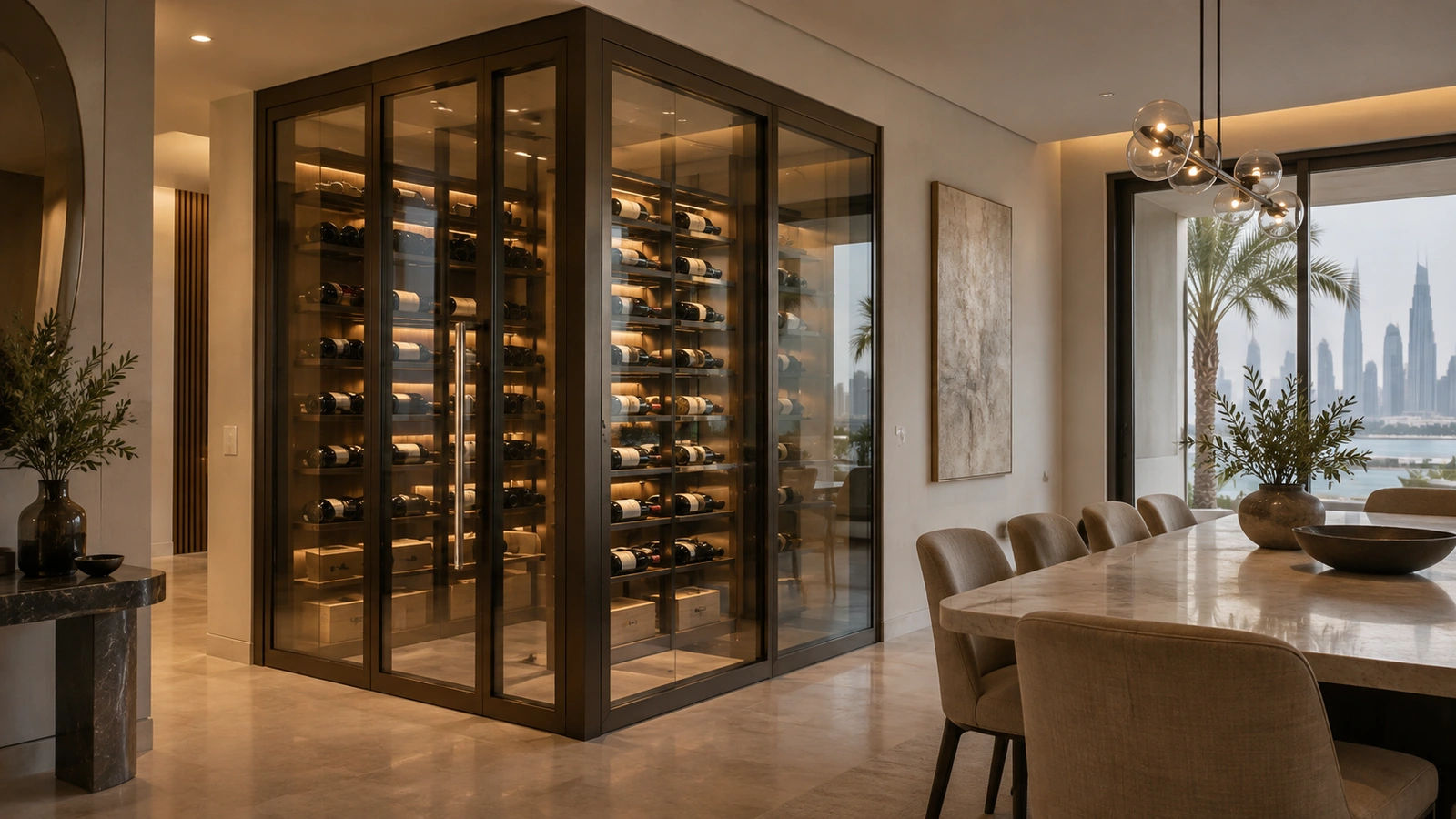
Glass Wine Rooms in Dubai: Insulated Glazing and Cost Guide
Planning a glass wine room in Dubai? Understand insulated glazing, sealed doors, condensation, cooling coordination and quote costs before installation.
Read article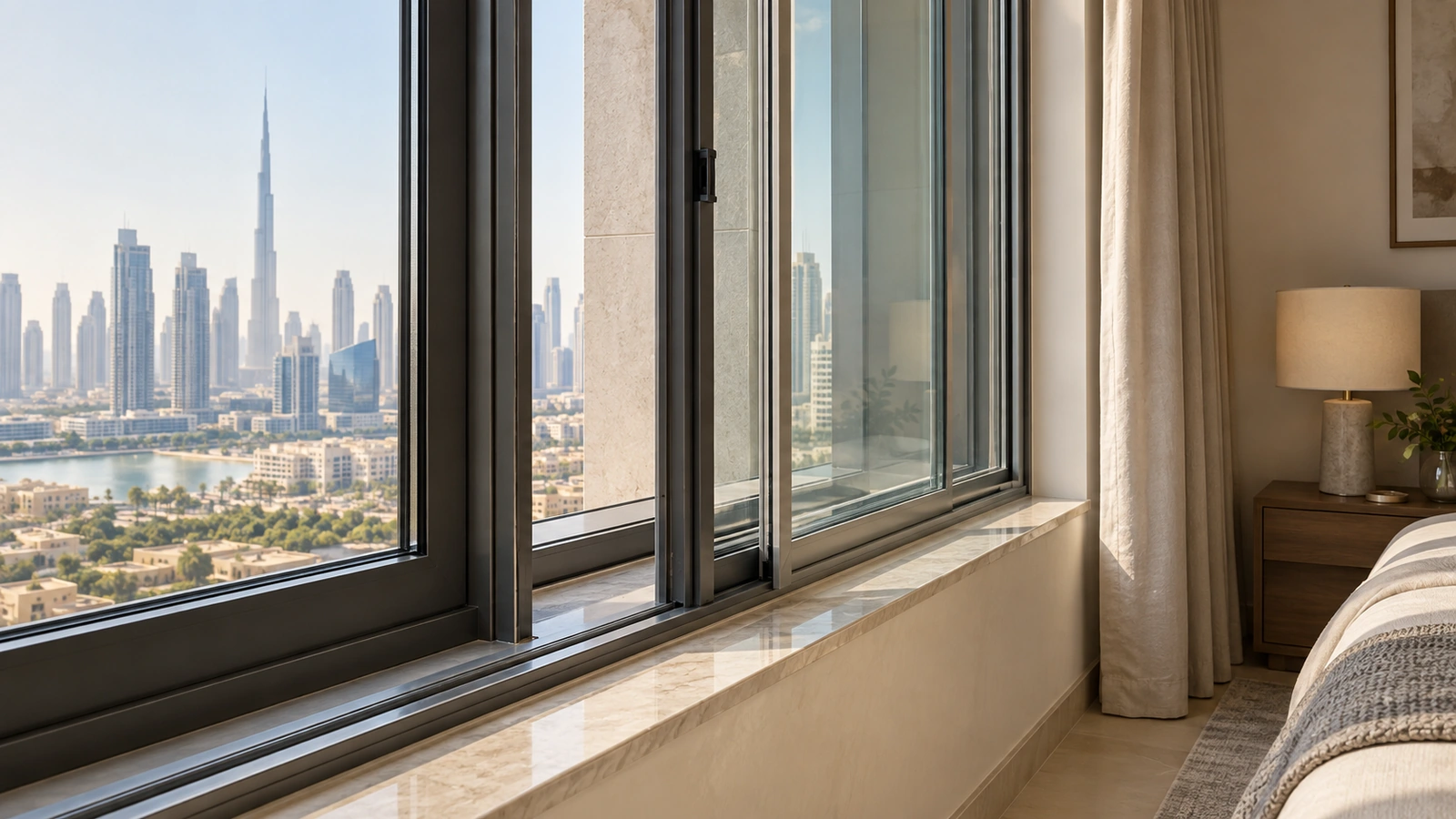
Secondary Glazing in Dubai: Apartment Retrofit and Cost Guide
Planning secondary glazing in Dubai? Compare apartment retrofit options, noise control, humidity, window access and quote costs before ordering.
Read article