
Glass Whiteboard Installation in Dubai: Office and Training Room Guide
Plan a custom glass whiteboard in Dubai with guidance on glass type, colour, wall support, sizing, fixings, installation, cleaning, and quote scope.
Quick answer
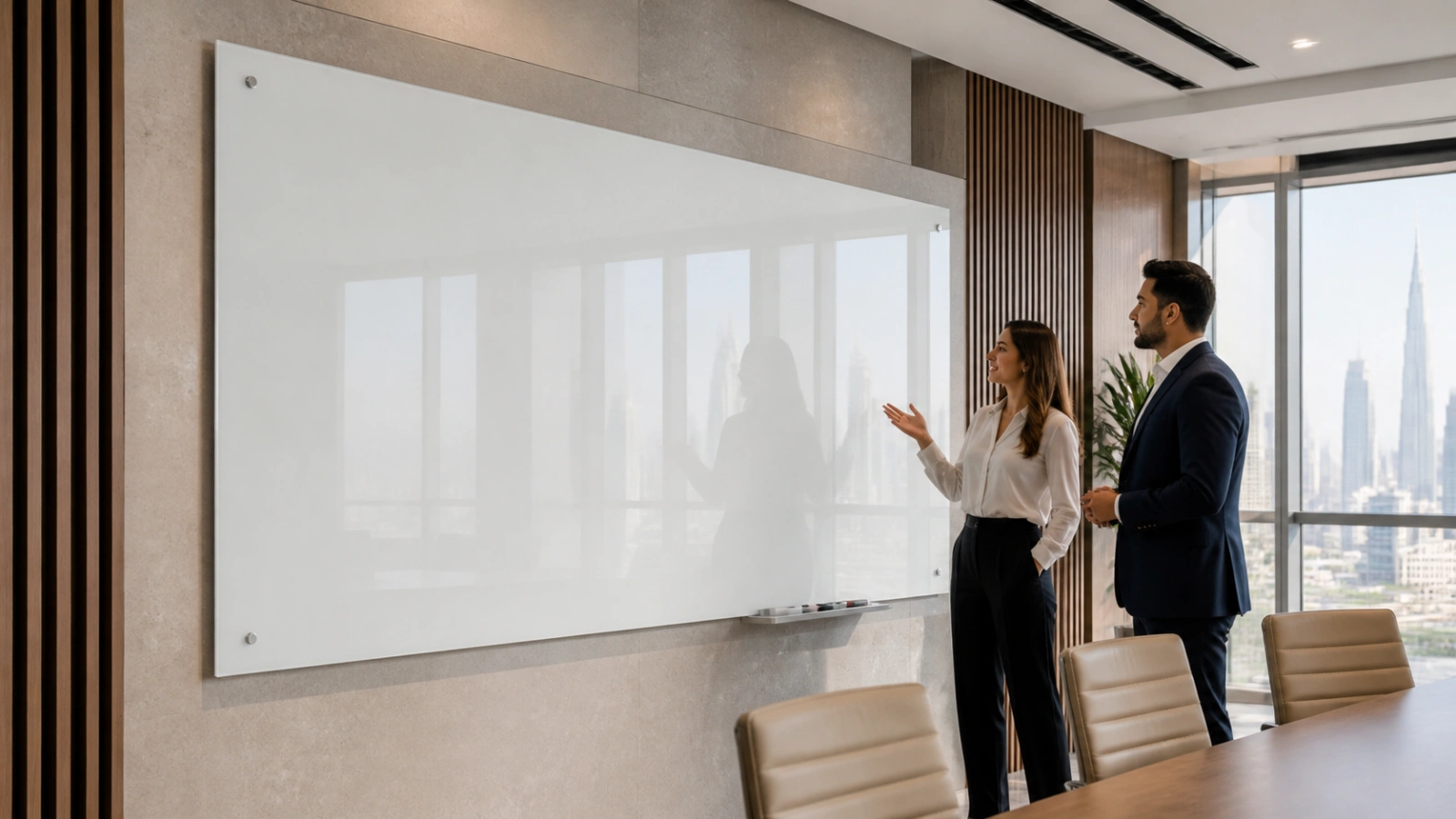
A custom glass whiteboard can give a Dubai meeting room, training space or office a durable writing surface with a clean architectural finish. A reliable result needs suitable safety glass, a writing-friendly back-painted face, polished and protected edges, sound wall support, coordinated fixings and final measurements taken after surrounding finishes are complete.
Specify the board as an installed feature rather than ordering a sheet from approximate dimensions. Glass World supports custom glass fabrication, glass replacement and specialist installation across Dubai and the UAE.
Why choose a glass writing board?
Glass provides a smooth, non-porous surface that can resist the staining and ghosting often seen on older conventional whiteboards when specified and cleaned correctly. It can be sized for a long presentation wall, compact meeting nook or repeated training rooms, while a frameless appearance coordinates with modern office interiors.
The surface is reflective, so lighting and window positions matter. Strong downlights or bright glazing directly opposite the board can create glare. Review viewing angles, presenter position, hybrid-meeting cameras and nearby screens before fixing the size and location.
Low-iron glass, colour and visual quality
Standard clear glass has a natural green cast that becomes visible at polished edges and can alter pale backing colours. Low-iron glass reduces this tint and is often preferred for a crisp white board or an exact interior colour. The low-iron glass guide explains when the upgrade is most noticeable.
Colour is normally applied to the rear so users write on the smooth front face. Approve a physical sample under the room's actual lighting because glass thickness, paint, wall colour and reflections influence the result. Confirm the backing system and any adhesives are mutually compatible.
Safety glass, dimensions and edge quality
Glass type and thickness should suit panel size, support arrangement, holes, wall condition and project requirements. Toughened safety glass is commonly considered for its strength and breakage behaviour. Completed toughened glass cannot be cut or drilled, so every dimension and fixing hole must be confirmed before processing.
Edges should be consistently polished and corners eased or radiused as specified. Large exposed panels need careful edge protection during delivery and use. A writing board is not a structural element and should not support shelves, displays or other loads unless a separate engineered system is provided.
Measure and coordinate the wall
Take final measurements after wall finishes, ceilings, skirtings, joinery and adjacent screens are established. Check wall width, height, flatness, substrate, hidden services, sockets, switches and access panels. Mark a comfortable writing zone and allow users to reach it without conflict with conference tables.
For long boards, confirm whether one pane can be fabricated, transported and safely lifted into place. Several aligned panels may simplify access and replacement but add joints. Beside a glass office partition, coordinate top lines, gaps, hardware finishes and reflections.
Fixings and wall support
Typical concepts include stand-off fixings through factory-drilled holes, concealed rails or engineered adhesive systems. The right route depends on panel weight, glass construction, wall substrate, appearance and future removability. Every fixing must transfer load to sound support; decorative plasterboard alone should not be assumed to carry a large glass panel.
Confirm reinforcement before the wall is closed where possible and survey for hidden services before drilling. Compatible gaskets or sleeves must prevent hard glass-to-metal contact. Installation should keep the panel level, maintain edge clearances and avoid forcing glass against an uneven surface.
Delivery, installation and handover
Check loading-bay rules, goods-lift dimensions, door widths, corridor turns, floor protection and the lifting zone before fabrication. Large panels may require a purpose-built stillage, rated suction equipment and several trained handlers. Keep the room isolated during installation and protect finished flooring and furniture.
Inspect the board before and after fixing for chips, scratches, coating defects, alignment and secure support. Install trays without drilling processed glass on site. If magnetic use is required, specify a tested magnetic glass-board system; ordinary back-painted glass should not be assumed to hold magnets.
Markers, cleaning and maintenance
Confirm compatible dry-erase markers and test them on the approved sample. Use soft cloths and non-abrasive products; avoid blades, scouring pads and aggressive chemicals that can scratch the face or damage nearby finishes. Permanent marker needs a manufacturer-approved removal method.
Keep furniture away from exposed lower edges and periodically check fixings, gaskets and trays. Stop using the board and restrict the nearby area if the glass becomes cracked, chipped, loose or contacts a hard fitting.
Cost factors and quotation checklist
Glass whiteboard cost in Dubai depends on size, low-iron or standard glass, thickness, safety processing, backing colour, polished edges, corner shape, holes, fixings, wall reinforcement, quantity, access and installation. A large one-piece board can cost more to handle and replace, while repeated boards may improve fabrication efficiency.
For a comparable quote, send the Dubai location, photographs, approximate size, wall construction, colour, quantity, access and programme. Ask the offer to state glass type and thickness, heat treatment, edge finish, backing, fixings, wall-support assumptions, final survey, delivery, installation, protection, warranty and exclusions.
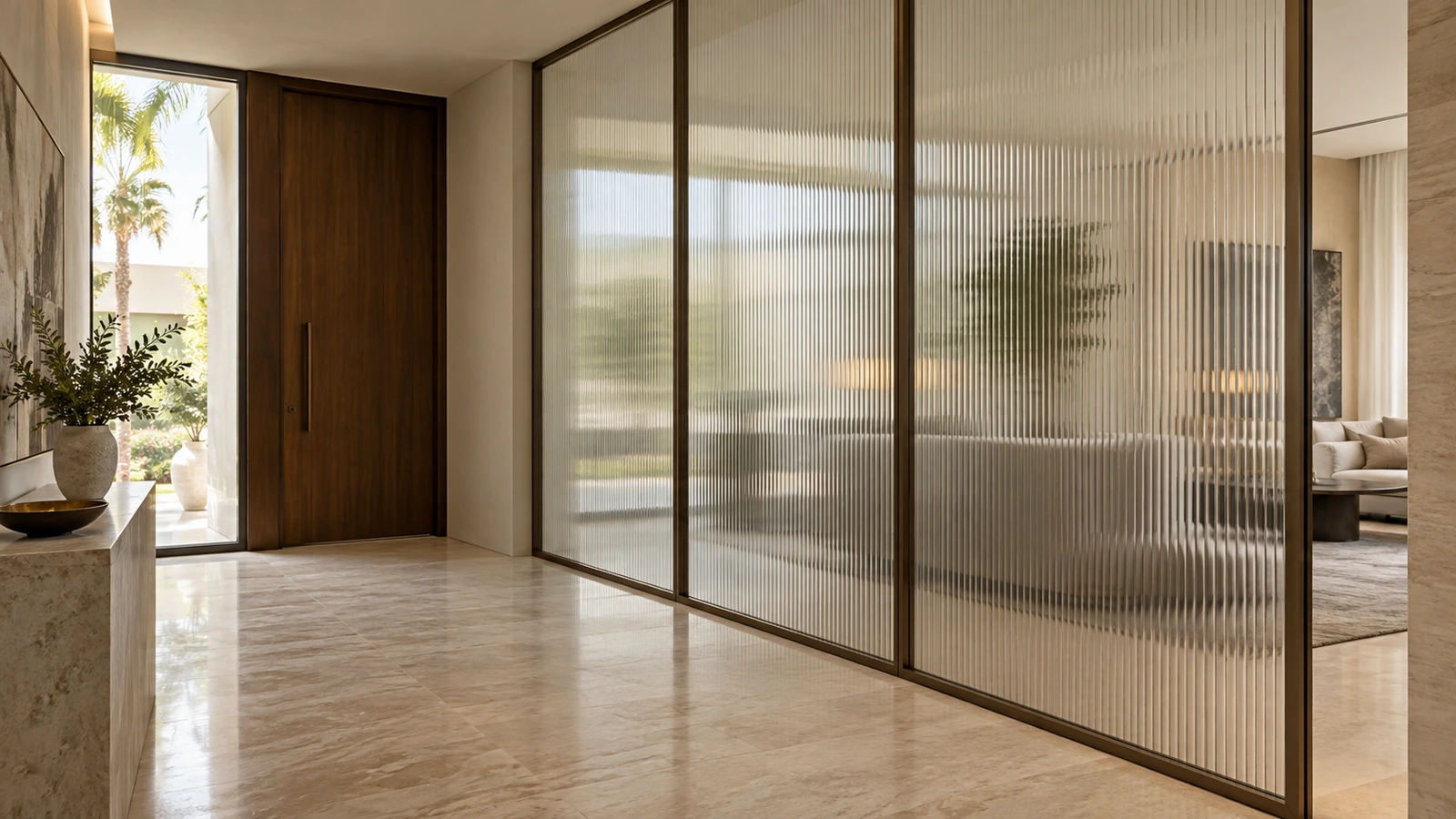
Fluted Glass Partitions in Dubai: Privacy and Cost Guide
Planning fluted glass partitions in Dubai? Compare privacy, rib patterns, safety glass, frames and installation costs before ordering a custom screen.
Read article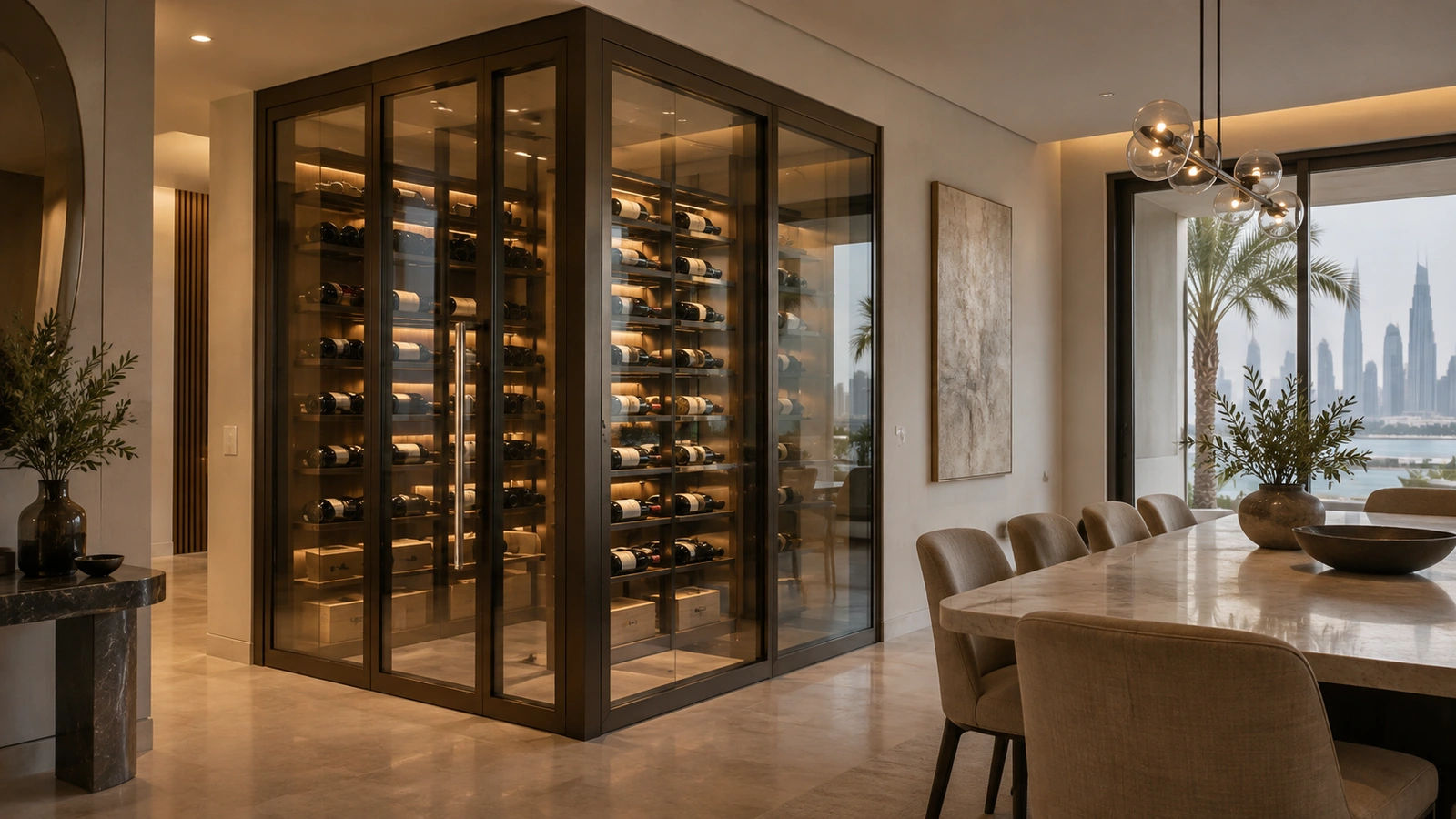
Glass Wine Rooms in Dubai: Insulated Glazing and Cost Guide
Planning a glass wine room in Dubai? Understand insulated glazing, sealed doors, condensation, cooling coordination and quote costs before installation.
Read article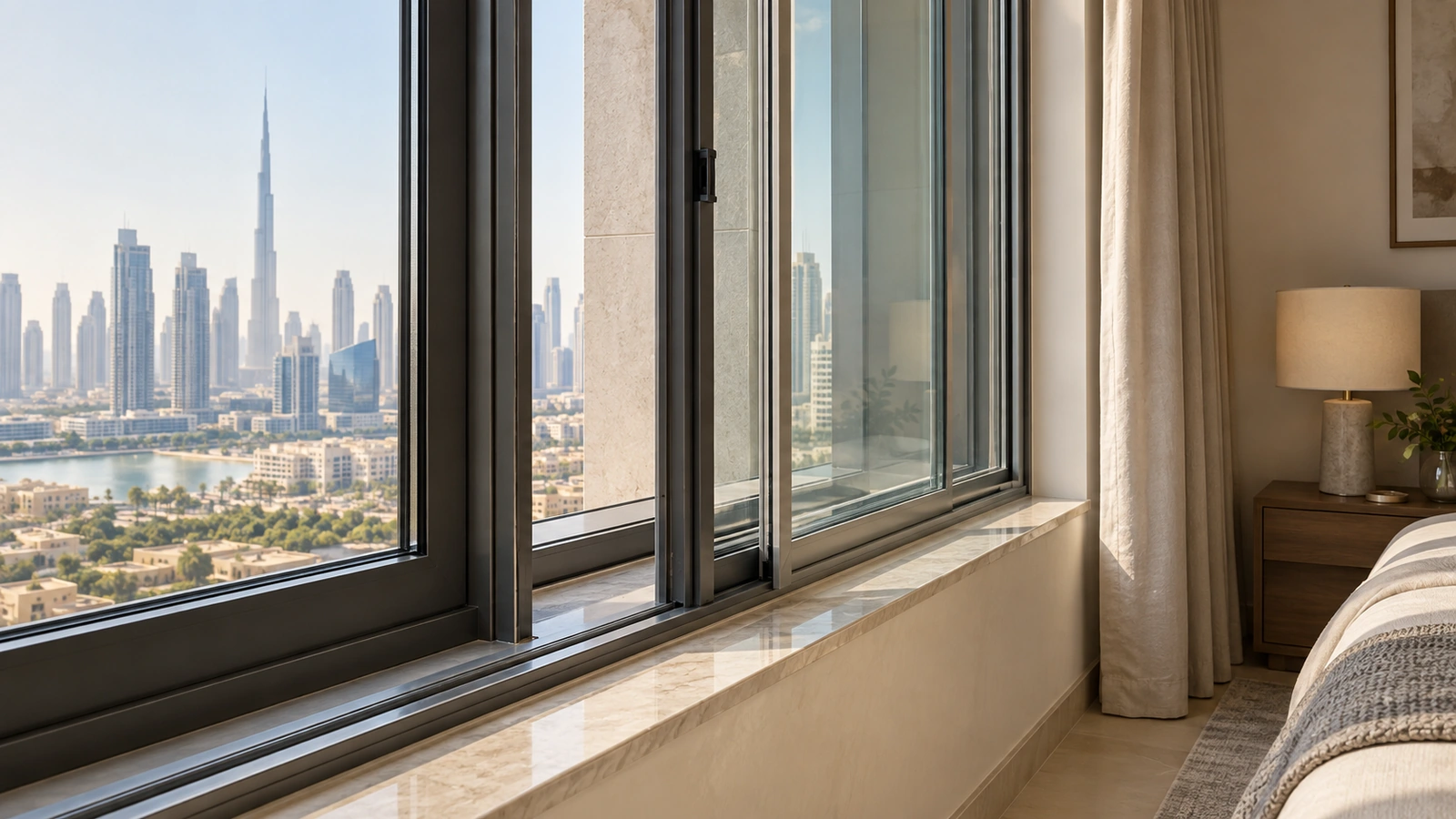
Secondary Glazing in Dubai: Apartment Retrofit and Cost Guide
Planning secondary glazing in Dubai? Compare apartment retrofit options, noise control, humidity, window access and quote costs before ordering.
Read article